

Reduced sexual desire in women has many possible causes, and they frequently occur together. Before any treatment makes sense, the question is why — because the answer determines what will actually help.
This is the part most clinic pages skip, and it’s the reason it opens ours. A woman whose low desire stems from an antidepressant, an untreated thyroid condition, or exhaustion from caregiving does not need a regenerative intervention. She needs the actual cause identified. Treating the wrong mechanism produces expense and disappointment in roughly equal measure.
Our Cancun consultations start here. For low desire specifically, that consultation more often points toward evaluation and established treatment than toward anything offered at our Cancun clinic, and we say so when it does — before you’ve spent any money traveling to Cancun.
Not sure where to start? Our Cancun medical team can help you work through the evaluation. Request a consultation →
- ✓Low desire has hormonal, medical, medication-related, relational and psychological causes — usually several simultaneously
- ✓Persistent low desire that causes personal distress may meet criteria for HSDD; without distress, it isn’t a disorder
- ✓Medication side effects are among the most common causes and the most frequently missed
- ✓Evaluation should precede treatment — the cause determines the approach
- ✓Several established treatments exist, including FDA-approved medications for HSDD in specific populations
- ✓Regenerative approaches for low desire specifically have very limited evidence — weaker than for any other condition treated at our Cancun clinic
- ✓Every patient goes through a medical consultation to determine the right approach for her situation
When Is Low Desire Actually a Medical Issue
Desire fluctuates with stress, sleep, relationship dynamics, life stage, medication, illness and countless other factors. Variation is normal and expected. A dip during a difficult year is not a disorder.
The clinical threshold generally involves persistent or recurrent low desire that causes personal distress. That last element matters enormously, and professional guidance from groups including ISSWSH has emphasized it. If low desire does not bother you, it is not a disorder. Women have been pathologized for decades against an assumed norm that often reflected a partner’s expectations rather than their own wellbeing, and the distress criterion exists partly to prevent that.
Hypoactive sexual desire disorder, HSDD, describes persistent, distressing low desire not better explained by another medical condition, a medication, or relationship circumstances. Those exclusions are the diagnostic work, which is precisely why evaluation matters more than any treatment discussion.
The Causes, Systematically
Hormonal. Estrogen decline through perimenopause and after menopause affects desire both directly and, importantly, indirectly — by causing the tissue changes that make sex uncomfortable. Pain reliably reduces desire. When women describe losing interest, the actual sequence is frequently discomfort first, avoidance second, reduced desire third. Testosterone is present and functionally relevant in women, declining gradually with age and abruptly after removal of the ovaries. Its role in female desire is real but more complex than direct-marketing claims suggest. Thyroid dysfunction affects energy, mood and desire, and is straightforward to test. Elevated prolactin suppresses desire and is also simple to check, and occasionally reveals something that warrants attention in its own right.
Medication-related — the most missed cause. This deserves its own emphasis because it is common, reversible, and routinely overlooked. SSRIs and SNRIs frequently reduce desire and orgasmic capacity — a well-documented effect, not an uncommon idiosyncratic reaction. Some hormonal contraceptives affect desire in some women, partly through effects on free testosterone. Beta blockers, some antihistamines, certain antipsychotics and others contribute. If your low desire began within a few months of starting a medication, that connection deserves investigation before anything else — certainly before travelling to Cancun for anything. Do not stop a prescribed medication on your own. Antidepressant discontinuation in particular can be genuinely harmful, and depression itself suppresses desire. This is a conversation with your prescriber about alternatives, timing and dose — not a decision to make after reading a webpage.
Medical, Physical and Relational Causes
Medical. Thyroid disease, diabetes, cardiovascular disease, chronic pain conditions, cancer and its treatment, depression and anxiety all affect desire through overlapping pathways — fatigue, mood, body image, hormonal disruption and vascular change.
Physical discomfort. Vaginal dryness, GSM, endometriosis, pelvic floor dysfunction, vulvodynia and lichen sclerosus produce pain or anticipated pain. Desire declines rationally in response. This is frequently the actual mechanism, and it is treatable. Our separate guide on vaginal dryness and GSM covers this in detail — this page stays focused on desire itself.
Situational and relational. Relationship distress, unresolved conflict, poor sleep, caregiving burden, work stress, body image concerns, and — commonly — a partner’s sexual difficulties. These are not lesser causes and they are not “just psychological.” They are among the strongest determinants of desire, and no injection addresses any of them. A clinic in Cancun that doesn’t ask about them is not conducting an evaluation.
How It Should Actually Be Evaluated
A reasonable assessment includes a full medication review, timing of onset relative to symptoms, thyroid function and prolactin where indicated, a menopausal status discussion including surgical menopause history, a pelvic examination if pain is present, screening for depression and anxiety, and a relationship and life-context conversation — conducted properly, not as a checkbox.
If a clinic in Cancun or anywhere else proposes treatment without most of this, that omission tells you what you need to know about their process, and our Cancun team will walk through each piece with you before discussing any treatment option.
Established Treatment Approaches
Address the underlying cause. Adjusting a medication with a prescriber, treating thyroid dysfunction, treating pain. This is frequently the highest-yield step and it is almost always the cheapest.
Treat physical discomfort. Where GSM or dryness contributes, local vaginal estrogen and related options are well established. Removing discomfort often restores desire indirectly and substantially — a mechanism worth exhausting before considering anything investigational.
FDA-approved HSDD medications. Flibanserin and bremelanotide are approved for HSDD in premenopausal women, with specific usage requirements and meaningful side-effect profiles — flibanserin’s interaction with alcohol in particular. Effect sizes in trials were modest but real. A prescriber familiar with them is the right person to discuss suitability.
Testosterone therapy. International consensus guidance supports a trial of testosterone for HSDD in postmenopausal women, at physiologic doses with appropriate monitoring. Key limitations: formulations approved for women are unavailable in many markets, dosing requires care to avoid supraphysiologic levels, and evidence in premenopausal women is insufficient to recommend it.
Sex therapy and psychological support. A strong evidence base and consistently underused. Mindfulness-based approaches in particular have accumulated meaningful supportive trial data for desire and arousal difficulties. This is not a lesser option or a consolation prize. For desire specifically — which is substantially psychological and relational — it is often the intervention with the best evidence available.
Pelvic floor physical therapy. Where muscle dysfunction, guarding or pain contributes.
Where Regenerative Approaches Actually Stand
We will be blunt — this is the weakest evidence position of any condition addressed at our Cancun clinic.
Regenerative approaches for female sexual dysfunction generally are early-stage — largely narrative reviews, animal models and registered trial protocols rather than completed human trials with controls. For low desire specifically, the evidence is thinner still. There is a mechanistic reason: desire is substantially neurological, hormonal, psychological and relational rather than a tissue-level phenomenon. A therapy aimed at tissue health addresses, at best, one contributing pathway among many.
Where regenerative therapy might plausibly contribute is indirect. If physical discomfort is driving low desire, improving tissue health could reduce that discomfort, and desire could recover as a consequence. That is a coherent hypothesis about a mechanism. It is not a demonstrated clinical outcome, and we are not going to present it as one.
On MUSE cells: Dezawa MuseCells® have registered human clinical trials in stroke, acute myocardial infarction, spinal cord injury, ALS, dystrophic epidermolysis bullosa, neonatal hypoxic-ischemic encephalopathy and ARDS. There is no published human clinical trial for low libido, HSDD, or any female sexual indication.
We are telling you this on a page that exists in part to attract patients to our Cancun clinic. We would rather have your trust than a booking made on a false impression, and for this complaint specifically, an honest assessment frequently points somewhere other than our Cancun clinic entirely.
Your Options Compared
Medication review and adjustment is established and often the first and highest-yield step, best suited for drug-induced low desire. Treating thyroid or prolactin abnormality is established, for identified endocrine causes. Local vaginal estrogen is established, for desire suppressed by discomfort or dryness. FDA-approved HSDD medications are established with an approved indication, for diagnosed HSDD in premenopausal women. Testosterone therapy is supported by international consensus, for HSDD in postmenopausal women. Sex therapy and mindfulness-based approaches are established with strong evidence, underused, for relational, situational and psychological factors. Pelvic floor physical therapy is established, for pain or muscle dysfunction. PRP-based injections are experimental. Stem cell therapy is investigational, with very limited evidence for desire specifically.
On branded protocols, the O-Shot® is a registered trademark of the Cellular Medicine Association. RejuvStem is not affiliated with, licensed by, or a provider of the O-Shot®. It appears here only for accurate comparison.
What Our Consultation Screens For
Every patient goes through a medical consultation before any treatment plan is set. For low desire, here is what that process is specifically checking.
Whether a medication is the likely cause. This is the single most overlooked possibility, and our Cancun physicians review every prescription and its start date relative to your symptoms.
Whether physical discomfort is the actual driver. A woman who avoids sex because it hurts may describe that as low desire, and the treatment for the two is entirely different.
Whether an endocrine or medical cause needs addressing. Thyroid dysfunction and elevated prolactin are simple to test and easy to miss if nobody asks.
Whether relational or psychological factors are primary. If so, sex therapy has stronger evidence than anything offered at our Cancun clinic, and that is what we will recommend.
Whether your expectations match what an investigational therapy can realistically offer here. Given how limited the evidence is for desire specifically, this conversation carries more weight on this page than almost anywhere else on our site.
Why Patients Consider Cancun, and When They Shouldn’t
Access. Cancun International Airport offers nonstop service from most major US and Canadian cities, with our Cancun facility roughly fifteen minutes away.
A defined regulatory framework. Stem cell therapy is legal in Mexico under COFEPRIS, the federal health regulator. Clinics in Cancun handling cells and tissues require specific authorizations, and treating physicians must hold a valid cédula profesional, publicly verifiable at cedulaprofesional.sep.gob.mx.
Allogeneic cells. RejuvStem is an authorized partner of MuseCell Innovations® in Mexico. Our Cancun program uses allogeneic MUSE cells — donor-derived and screened, requiring no harvesting procedure. We never describe them as autologous.
Unhurried evaluation. For a complaint requiring genuine history-taking across medication, hormones, physical comfort and life context, the most useful thing our Cancun team offers many women is simply enough time. That is a benefit of proper consultation rather than of any specific therapy, and you may be able to find it closer to home with the right clinician.
Logistics and Honest Trade-Offs
Practical logistics. Cancun’s tourism infrastructure supports accommodation across a wide range and a largely English-speaking service sector, and our clinical team works in both English and Spanish. We don’t publish treatment pricing because a genuine figure depends on consultation, though travel and accommodation costs in Cancun are something we discuss openly.
Being straightforward about when not to come. For low desire specifically, our Cancun physicians more often recommend evaluation and established treatment than travel. If your history points to a medication effect, an untreated thyroid issue, a relationship factor, or untreated GSM, then travelling to Cancun for regenerative therapy would be addressing the wrong thing. If your consultation points that way, that is what you will hear from us.
The honest trade-off. Care in Cancun means follow-up at a distance, and for a condition requiring iterative adjustment, which desire complaints often do, continuity with a clinician who knows you has real value.
Want to know what’s actually causing it? That’s the right question, and our Cancun team will help you work through it honestly. Request a consultation →
What a Cancun Consultation Involves
Not a protocol — a general sequence. Specifics belong in consultation.
Before you travel. A remote consultation comes first. Our Cancun physicians review medication history, hormonal status, physical comfort during sex, mood, sleep, and relationship context. For low desire specifically, this conversation frequently identifies a cause that has nothing to do with anything offered at our Cancun clinic, and when it does, we say so.
What to bring. A complete medication list with start dates, any recent thyroid or prolactin results, menopausal history, and a sense of when the change began and what coincided with it. That timeline is often the single most diagnostic piece of information, and women who arrive in Cancun without having thought about it get less from the consultation.
Why many women should not travel to Cancun for this. If your history points to an SSRI, an untreated thyroid condition, untreated GSM, or a relationship factor, then flying to Cancun for regenerative therapy would be treating the wrong thing at considerable expense. Our Cancun team makes that recommendation regularly. It is the correct recommendation more often for this complaint than for any other we assess.
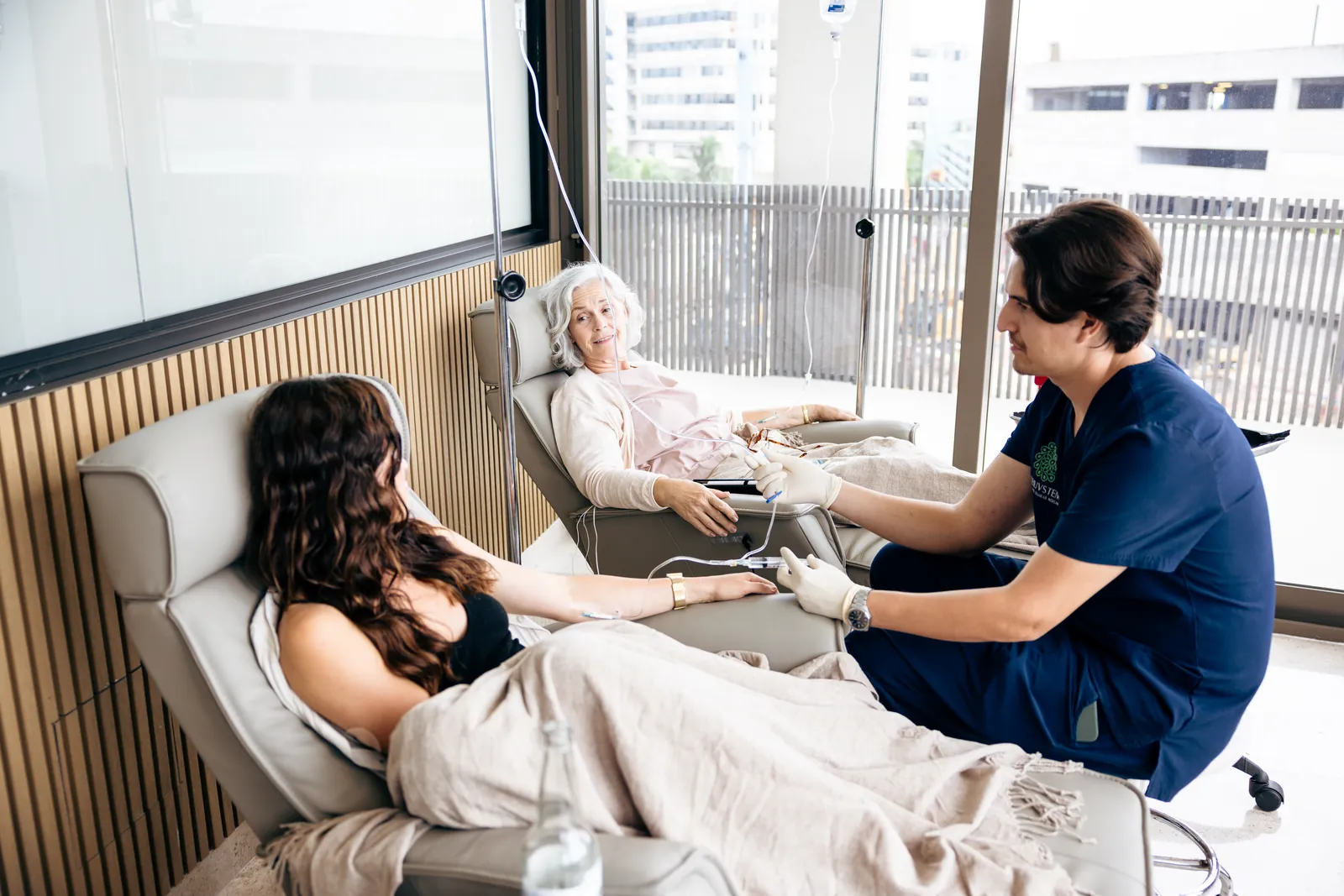
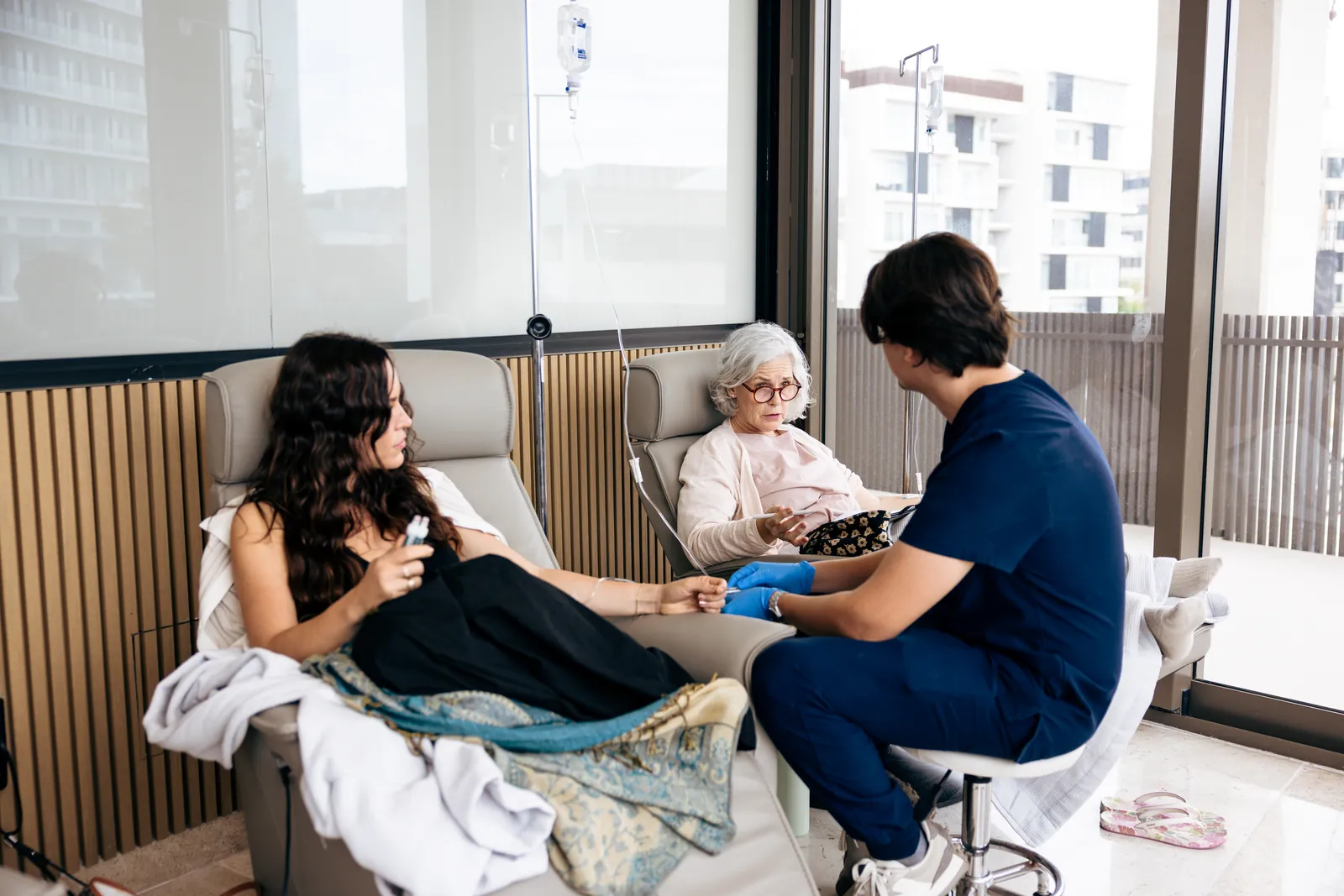
On arrival. In-person evaluation happens at our Cancun facility, within a fully certified private hospital, before anything is finalized.
Afterward. Follow-up happens remotely. Desire complaints often require iterative adjustment over time, and continuity with a clinician who knows you has real value — a genuine argument for care at home rather than in Cancun for some women.
What we will not publish. Session counts, timing, dosages or frequencies.
Questions Worth Asking Any Clinic
- •Have you reviewed every medication I take, and when my symptoms started relative to them?
- •Have you checked thyroid function and prolactin?
- •Have you asked whether sex is physically uncomfortable?
- •Have you asked about my relationship, sleep and stress?
- •What published human evidence exists for this indication specifically?
- •Would you tell me if you thought I shouldn’t be treated here?
Frequently Asked Questions
Is low libido a medical condition?
Could my antidepressant be causing this?
Does stem cell therapy increase libido?
Should I get my hormones tested?
Is testosterone therapy an option for women?
What if it’s my relationship rather than my body?
Do you offer the O-Shot®?
Is low desire just part of getting older?
How much does treatment cost?
Do I need a consultation before travelling to Cancun?
Is RejuvStem’s Cancun clinic accredited?
Can I bring my partner to the Cancun consultation?
Are MUSE cells proven for women’s sexual health?
Ready for an honest evaluation? Every patient goes through a medical consultation with our Cancun team, who will help you identify what is actually driving your symptoms and tell you plainly if the answer is something we do not treat. Request a consultation →
RejuvStem is an authorized partner of MuseCell Innovations® in Mexico, operating in Cancun. Stem cell therapy for female sexual indications is investigational and is not approved by the US FDA. Evidence for regenerative approaches to low sexual desire specifically is very limited, and no published human clinical trial exists for MUSE cells in any female sexual indication. Individual results vary and no outcome is guaranteed. This page is general information, not medical advice, and does not replace guidance from your prescriber. O-Shot® is a registered trademark of the Cellular Medicine Association; RejuvStem is not affiliated with, licensed by, or a provider of it.