Accelerated Healing and Preventing Re-Injury
You felt it pop.
Mid-sprint, your hamstring seized. Searing pain shot down the back of your thigh. You knew immediately—you’d torn it. The MRI confirmed Grade 2 muscle tear, maybe Grade 3. Your season is over. The sports medicine doctor predicts 3-6 months recovery, cautioning that hamstring tears re-tear frequently—40-60% recurrence rate within a year.
The treatment plan: rest, ice, gentle stretching, months of gradual strengthening. No guarantees. The muscle will heal with scar tissue—weaker, less flexible, prone to tearing again at the same spot. You’ll never quite trust that leg again. Every explosive movement brings anxiety about re-injury.
What if you could heal with minimal scar tissue and reduce re-tear risk dramatically?
At RejuvStem in Cancun, Mexico, we provide Dezawa MuseCells® therapy for muscle tears—regenerative treatment promoting proper muscle fiber healing, reducing scar tissue formation, and accelerating recovery beyond conventional rest and therapy.
For athletes and active individuals facing months of sideline time and high re-injury risk, regenerative medicine in Cancun offers superior muscle healing.
Call RejuvStem Cancun+1 (302) 551 3530to discuss muscle tear treatment→Why Muscle Tear Patients Choose RejuvStem Cancun
Understanding Muscle Tears
The Athlete’s Setback
According to the American Academy of Orthopaedic Surgeons, muscle strains account for up to 30% of sports injuries—with hamstring tears being particularly common and problematic.
- •Few muscle fibers torn (less than 10%)
- •Mild pain and tenderness
- •Minimal loss of strength
- •Can usually continue activity
- •1-3 week recovery
- •Significant fiber damage (10-50%)
- •Moderate to severe pain
- •Noticeable weakness
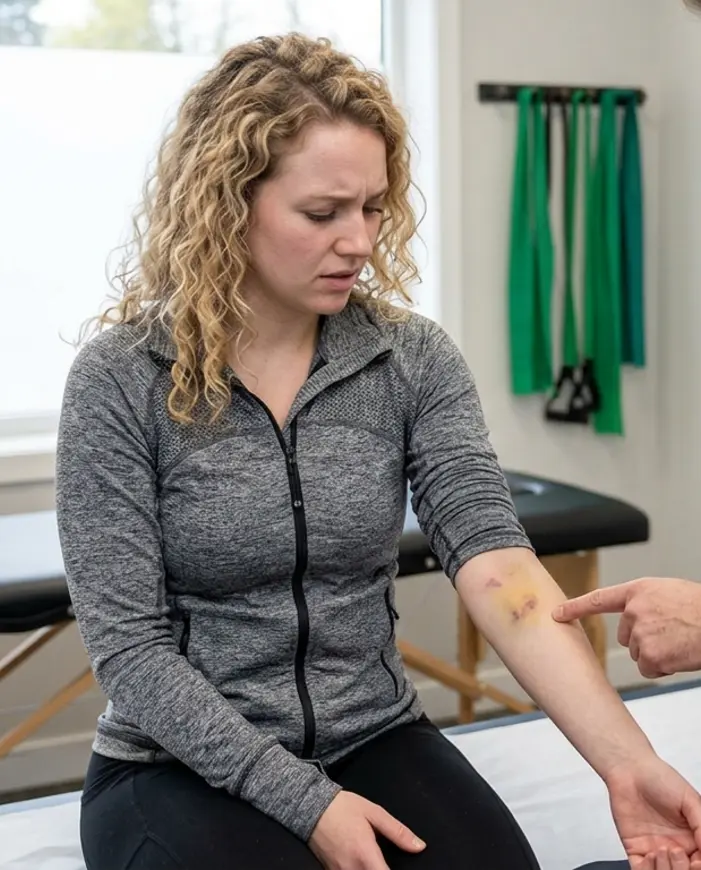
- •Visible swelling and bruising
- •Cannot continue activity
- •4-12 week recovery
- •Complete muscle or tendon tear
- •Severe pain followed by numbness
- •Total loss of function
- •Visible deformity or gap
- •Immediate inability to use muscle
- •3-6+ month recovery, often requires surgery
- •Most common muscle tear in athletes
- •Three muscles: biceps femoris, semitendinosus, semimembranosus
- •Usually occurs at musculotendinous junction
- •40-60% recurrence rate (highest of any muscle)
- •Career-threatening for sprinters
- •Front thigh muscles
- •Rectus femoris most commonly torn
- •Sudden deceleration or kicking injuries
- •Can cause significant disability
- •“Tennis leg” when medial head tears
- •Sudden pushing off or jumping
- •Distinctive “pop” sensation
- •Significant bruising
- •Groin area pain
- •Explosive acceleration injuries
- •Difficult to fully rest due to daily use
- •Inner thigh muscles
- •Lateral movements, direction changes
- •Common in soccer, hockey players
- •Shoulder muscle group
- •Overhead activities
- •Can involve tendon and muscle
- •Chest muscle rupture
- •Heavy bench pressing
- •Visible deformity with complete tear
- •Biceps muscle
- •Triceps muscle
- •Abdominal muscles (obliques, rectus abdominis)
- •Explosive acceleration or deceleration
- •Sudden overstretching
- •Direct impact or contusion
- •Inadequate warm-up
- •Muscle fatigue
- •Previous injury (scar tissue vulnerable)
- •Muscle imbalances
- •Flexibility deficits
- •Sudden sharp pain during activity
- •Audible or felt “pop”
- •Immediate muscle spasm
- •Rapid swelling within hours
- •Bruising (may appear days later, track down leg)
- •Weakness and loss of function
- •Reduced range of motion
- •Tenderness at injury site
- •Visible deformity (complete tears)
- •High re-injury rate (especially hamstrings)
- •Chronic scar tissue formation
- •Permanent strength deficit
- •Reduced flexibility
- •Prolonged recovery (3-6+ months)
- •Career-ending for professional athletes
- •Chronic pain and disability
Muscle tears end seasons, careers, and athletic participation.
Why Muscles Heal Poorly
Underlying mechanismsThese factors create weak scar-based healing prone to recurrent injury.
Conventional Treatment Limitations
Long Recovery, High Re-Injury
Current approaches- •Scar tissue formation inevitable
- •Long recovery times (3-6+ months)
- •High re-injury rates (40-60% for hamstrings)
- •Residual strength deficits (10-30%)
- •Reduced flexibility
- •Chronic pain at injury site
- •Never quite the same explosive power
- •Fear of re-injury affecting performance
Conventional treatment accepts scar tissue healing with high re-tear risk.
How Dezawa MuseCells® Heal Muscle Tears
- •Activate satellite cells (muscle stem cells)
- •Promote myoblast proliferation
- •Support myofiber formation
- •Restore muscle architecture
- •Create functional contractile tissue
- •Modulate fibroblast activity
- •Reduce excessive collagen deposition
- •Promote organized matrix remodeling
- •Create favorable healing environment
- •Minimize scar tissue formation
- •Reduce inflammatory cytokines
- •Calm excessive immune response
- •Protect healthy surrounding tissue
- •Promote resolution phase
- •Optimize healing environment
- •Form new blood vessels
- •Improve oxygen delivery
- •Enhance nutrient supply
- •Support metabolic demands
- •Accelerate healing
- •Stimulate satellite cell activation
- •Promote myoblast differentiation
- •Support muscle fiber growth
- •Enhance tissue integration
- •Accelerate regeneration
- •Restore tensile strength
- •Improve elasticity
- •Enhance power output
- •Restore contractile function
- •Reduce re-injury risk
Clinical Improvements
At RejuvStem Cancun:
- •Returned to sport 40-60% faster
- •Grade 2 hamstring: 6-8 weeks vs. 12-16 conventional
- •Grade 2 quadriceps: 4-6 weeks vs. 10-12 conventional
- •Earlier return to training
- •Dramatically lower re-tear rates
- •Muscle feels more resilient
- •Confidence in explosive movements
- •No fear of re-injury
- •Full power recovery
- •No residual weakness
- •Equal bilateral strength testing
- •Explosive capability restored
- •Full range of motion restored
- •No tightness or restriction
- •Better than pre-injury (some patients)
- •Improved overall muscle quality
- •Complete pain resolution
- •No chronic discomfort
- •Pain-free sprinting, jumping
- •Normal training loads
- •Less scar tissue on ultrasound
- •Better muscle fiber organization
- •Improved tissue architecture
- •Superior biomechanical properties
Muscle-specific outcomes
- •Returned to sprinting without fear
- •No re-tears in follow-up
- •Full speed and power
- •Career-saving for athletes
- •Restored kicking power
- •Pain-free squatting
- •Full extension strength
- •Returned to jumping sports
- •Pain-free push-off
- •Returned to running, tennis
- •No chronic tightness
- •Full explosive power
Many muscle tear patients at RejuvStem in Cancun recover faster with better quality healing.
The Approach at RejuvStem Cancun
Why Choose RejuvStem Cancun
- •Verified Dezawa MuseCells®
- •Proven regenerative effects
- •Superior healing properties
- •Muscle injury-specific protocols
- •Muscle tear treatment at RejuvStem in Cancun
- •Athlete recovery protocols
- •High-level performance demands
- •Return-to-sport guidance
- •Direct flights from major cities
- •15 minutes from airport
- •English-speaking team
- •Combine treatment with active recovery
- •Beautiful environment
Common Questions
Most athletes recover 40-60% faster than conventional treatment. Grade 2 hamstring typically 6-8 weeks vs. 12-16 weeks conventional. Individual results vary.
Yes. By promoting proper muscle fiber regeneration and reducing scar tissue, re-injury risk drops significantly. Hamstring re-tear rates particularly improved at RejuvStem in Cancun.
Ideal timing is within 7-14 days of acute injury—after initial inflammation settles but before significant scar tissue forms. Contact RejuvStem in Cancun immediately after diagnosis.
Fresh injuries respond best. Chronic tears (months to years old) may improve modestly. Best to treat acutely for optimal results.
Some Grade 3 tears heal with stem cells avoiding surgery. Depends on muscle involved, gap size, and patient factors. Evaluation determines candidacy. Many complete tears still require surgical repair.
Yes. Hamstring re-injury rates dramatically reduced at RejuvStem in Cancun through superior healing quality. Many athletes with previous hamstring injuries treat new tears here preventing recurrence cycles.
Dezawa MuseCells® at RejuvStem in Cancun provide more comprehensive regenerative effects than PRP—true stem cell regenerative capacity vs. growth factors alone.
Heal Faster, Heal Better, Prevent Re-Injury
Your muscle tear sidelines you for months. Conventional treatment accepts scar tissue healing prone to re-injury. Athletes face 40-60% re-tear rates. Careers end from recurrent muscle tears that won’t heal properly.
What if you could heal with functional muscle tissue, not scar tissue?
At RejuvStem in Cancun, we provide Dezawa MuseCells®—superior muscle regeneration reducing recovery time 40-60% and dramatically lowering re-injury risk. Many muscle tear patients return to sport faster with better healing quality.
- •Complete muscle injury assessment
- •Tear grade and location review
- •Treatment timing optimization
- •Expected recovery timeline
- •Return-to-sport planning
- •All questions answered
Muscle regeneration. Faster recovery. No re-tears. RejuvStem Cancun.
- 1American Academy of Orthopaedic Surgeons
- 2Sports Medicine
- 3British Journal of Sports Medicine
- 4Stem Cell Research & Therapy
Medical Disclaimer: Dezawa MuseCells® therapy is performed in Mexico under COFEPRIS regulation. Not FDA-approved in the United States. Results vary by tear severity, muscle location, and timing of treatment. Some Grade 3 complete ruptures may still require surgical repair.