Regenerating What Doesn’t Heal
The MRI showed the defect. A hole in your cartilage.
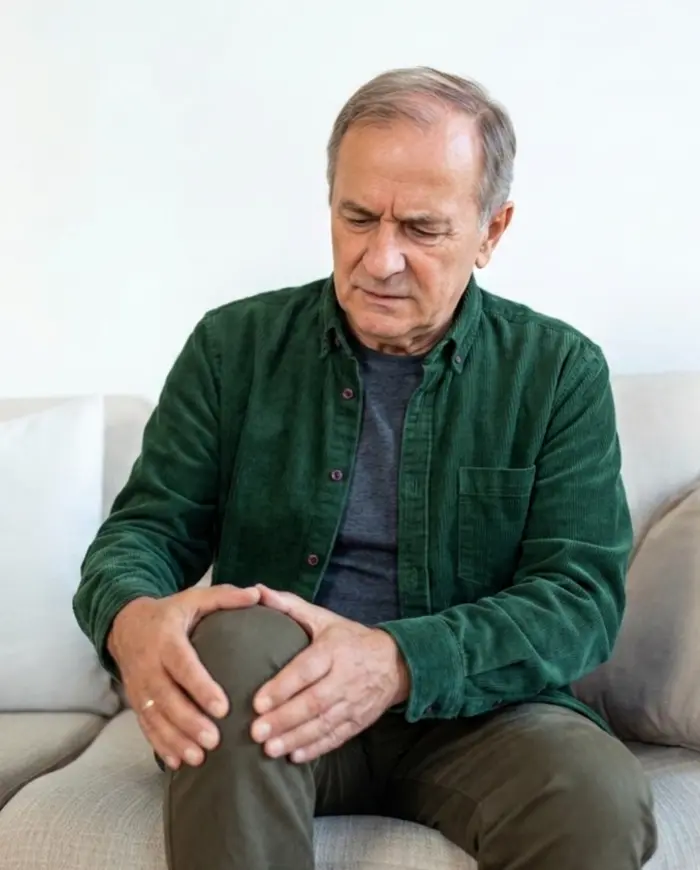
Your knee catches, locks, gives way unpredictably. Every step hurts. The orthopedic surgeon showed you the images—bare bone exposed where protective cartilage should be. You’re 35, maybe 45—too young for joint replacement but the damage is there, worsening monthly.
The surgeon offers limited options: microfracture surgery (creating fibrocartilage, not real cartilage, with mediocre results), cartilage grafting (limited donor sites, complex surgery), or “wait until you’re old enough for total knee replacement.” All options involve surgery, lengthy recovery, and accepting that your cartilage will never truly regenerate.
What if you could actually regrow articular cartilage instead of accepting permanent damage?
At RejuvStem in Cancun, Mexico, we provide Dezawa MuseCells® therapy for cartilage damage—regenerative treatment promoting true cartilage formation, protecting remaining tissue, and potentially avoiding surgery that offers only imperfect solutions.
For cartilage damage patients facing progressive arthritis and eventual joint replacement, regenerative medicine in Cancun offers cartilage regeneration.
Call RejuvStem Cancun+1 (302) 551 3530to discuss cartilage damage treatment→Why Cartilage Damage Patients Choose RejuvStem Cancun
Understanding Cartilage Damage
The Joint Surface Problem
According to the American Academy of Orthopaedic Surgeons, articular cartilage injuries affect millions of Americans—with knee cartilage damage being particularly common in active individuals.
What is articular cartilageArticular cartilage is smooth, white tissue covering bone ends in joints—providing frictionless gliding surface and shock absorption. Unlike most body tissues, cartilage has no blood vessels, no nerves, and minimal regenerative capacity. Once damaged, it cannot heal naturally—a critical problem causing progressive joint destruction.
- •Damage limited to cartilage layer
- •Doesn’t extend into bone
- •Grades 1-4 (Outerbridge Classification)
- •Damage extends through cartilage into underlying bone
- •More serious, affects bone and cartilage
- •Creates unstable joint surface
- •Isolated damaged areas
- •Surrounded by healthy cartilage
- •Caused by trauma or repetitive stress
- •Widespread cartilage thinning
- •Early arthritis
- •Progressive breakdown
- •Knee: Femoral condyles, patella, tibial plateau (most common)
- •Shoulder: Humeral head, glenoid
- •Ankle: Talus (weight-bearing dome)
- •Hip: Femoral head, acetabulum
- •Elbow: Capitellum, radial head
- •Acute trauma (sports injuries, falls)
- •ACL/meniscus injuries damaging joint surface
- •Repetitive impact (running, jumping)
- •Joint instability creating abnormal wear
- •Osteochondritis dissecans (bone/cartilage fragment)
- •Previous joint surgery
- •Aging and degeneration
- •Deep joint pain with activity
- •Swelling after use
- •Catching, locking, or grinding
- •Joint giving way
- •Reduced range of motion
- •Stiffness after rest
- •Progressive functional decline
- •Grade 1: Softening, no visible damage
- •Grade 2: Fissuring, less than 50% depth
- •Grade 3: Fissuring greater than 50% depth
- •Grade 4: Exposed bone (full-thickness loss)
- •Progressive arthritis (inevitable without treatment)
- •Chronic disability and pain
- •Need for joint replacement (often at young age)
- •Loss of athletic/active lifestyle
- •Permanent functional limitations
Cartilage damage guarantees arthritis without regenerative intervention.
Why Cartilage Doesn’t Heal
Underlying mechanismsThese factors make cartilage essentially non-regenerative—damaged cartilage stays damaged.
Conventional Treatment Limitations
Imperfect Solutions
Current approaches- •Rest, ice, physical therapy
- •NSAIDs for pain (don’t heal cartilage)
- •Activity modification (limiting life)
- •Ineffective for structural damage
- •Damage progresses regardless
- •Remove loose cartilage fragments
- •Smooth rough edges
- •Provides temporary relief (months)
- •Doesn’t regenerate cartilage
- •Damage remains
- •Drill holes in bone creating bleeding
- •Blood brings stem cells forming fibrocartilage
- •Creates inferior scar tissue (not true hyaline cartilage)
- •Works poorly for large defects (>2cm)
- •Degenerates within 5-10 years
- •Only one chance—cannot repeat
- •Harvest cartilage plugs from non-weight-bearing areas
- •Transplant to defect
- •Limited donor sites (can only harvest so much)
- •Donor site pain and damage
- •Technically demanding
- •Doesn’t integrate perfectly
- •Harvest patient’s cartilage, grow cells in lab, reimplant
- •Requires two surgeries
- •Expensive ($30,000+)
- •Long recovery (6-12 months)
- •Variable results
- •Not suitable for all defects
- •Total knee/hip/shoulder replacement
- •Major surgery with significant risks
- •15-20 year lifespan (younger patients outlive implants)
- •Permanent activity restrictions
- •Revision surgeries increasingly difficult
All current surgical options involve surgery, lengthy recovery, and create imperfect substitutes for natural cartilage.
How Dezawa MuseCells® Regenerate Cartilage
- •Differentiate into chondrocyte-like cells
- •Produce collagen type II (cartilage-specific)
- •Synthesize proteoglycans and glycosaminoglycans
- •Form hyaline-like cartilage matrix
- •Create functional articular surface
- •Stimulate existing chondrocytes
- •Promote matrix synthesis
- •Enhance cartilage repair
- •Support tissue integration
- •Improve healing quality
- •Lower inflammatory cytokines (IL-1, TNF-α)
- •Reduce matrix metalloproteinases (cartilage-degrading enzymes)
- •Calm synovial inflammation
- •Protect existing cartilage
- •Enable regeneration
- •Reduce oxidative stress
- •Decrease catabolic activity
- •Support chondrocyte survival
- •Prevent adjacent cartilage breakdown
- •Slow arthritis progression
- •Enhance subchondral bone structure
- •Improve bone-cartilage interface
- •Support tissue integration
- •Optimize mechanical properties
- •Create stable foundation
- •Better biomechanical properties
- •Improved durability
- •More natural composition
- •Superior integration
- •Longer-lasting repair
Clinical Improvements
At RejuvStem Cancun:
- •Resolved deep joint pain
- •Pain-free weight-bearing
- •Eliminated catching/locking
- •Restored comfortable movement
- •Regained full range of motion
- •Returned to sports and activities
- •Pain-free stairs, squatting, kneeling
- •Restored athletic performance
- •MRI showing defect filling
- •Smooth joint surface restoration
- •Reduced bone marrow edema
- •Improved cartilage thickness
- •Delayed arthritis progression
- •Avoided or postponed joint replacement
- •Preserved natural joint
- •Sustained improvement years later
Joint-specific outcomes
- •Pain-free running and jumping
- •Resolved mechanical symptoms
- •Avoided microfracture surgery
- •Delayed or prevented knee replacement
- •Pain-free overhead activities
- •Restored throwing ability
- •Avoided joint replacement
- •Returned to tennis, baseball
- •Pain-free walking and running
- •Resolved chronic ankle pain
- •Avoided fusion surgery
- •Restored athletic function
Many cartilage damage patients at RejuvStem in Cancun regenerate cartilage and avoid surgery.
The Approach at RejuvStem Cancun
Why Choose RejuvStem Cancun
- •Verified Dezawa MuseCells®
- •Proven chondrogenic (cartilage-forming) potential
- •Superior regenerative properties
- •Cartilage-specific protocols
- •Focal cartilage defect treatment at RejuvStem in Cancun
- •Multiple joint types
- •Post-surgical failure cases
- •Return-to-sport protocols
- •Direct flights from major cities
- •15 minutes from airport
- •English-speaking team
- •Comfortable recovery
- •Beautiful environment
Common Questions
Yes. Dezawa MuseCells® can differentiate into chondrocytes and promote cartilage matrix formation. Many patients achieve defect filling verified on follow-up MRI at RejuvStem in Cancun.
Focal defects up to 3-4cm² respond well. Larger defects may improve significantly. Widespread degeneration (advanced arthritis) has limited regenerative potential.
Cartilage formation is gradual. Pain improves within 2-3 months. Structural regeneration continues 6-12 months. Follow-up MRI at 12 months shows new cartilage formation.
Yes—creates hyaline-like cartilage (not fibrocartilage). No surgery, faster recovery, better quality tissue, longer-lasting results. Worth trying before microfracture—which cannot be repeated.
Advanced arthritis with complete cartilage loss has limited regenerative potential. Earlier intervention offers best results. Some bone-on-bone patients still improve, but expectations must be realistic.
Many patients return to high-impact activities after cartilage regeneration at RejuvStem in Cancun. Timeline typically 4-6 months, with gradual progression.
Yes. By regenerating cartilage and reducing symptoms, many younger patients delay or avoid knee replacement for years or decades.
Regenerate Your Cartilage, Save Your Joint
The MRI shows the damage. Your surgeon offers microfracture (creating inferior fibrocartilage), cartilage grafting (limited donor sites), or “wait for joint replacement when you’re older.” None regenerate true articular cartilage. All involve surgery, recovery, and imperfect results.
What if you could regrow your own cartilage?
At RejuvStem in Cancun, we provide Dezawa MuseCells®—cartilage regeneration offering what conventional surgery cannot: true hyaline-like cartilage formation. Many cartilage damage patients regenerate tissue and avoid surgery.
- •Complete cartilage damage assessment
- •Defect size and location review
- •Treatment appropriateness evaluation
- •Expected regeneration timeline
- •Return-to-activity planning
- •All questions answered
Cartilage regeneration. Joint preserved. Surgery avoided. RejuvStem Cancun.
Medical Disclaimer: Dezawa MuseCells® therapy is performed in Mexico under COFEPRIS regulation. Not FDA-approved in the United States. Results vary by defect size, location, and patient factors. Advanced arthritis may have limited regenerative potential.