Stem cell therapy is gaining attention as a potential treatment for shoulder injuries, especially rotator cuff tears, offering the prospect of strong, pain-free shoulders – with no surgery required. This regenerative approach aims to harness the body’s own healing mechanisms to repair damaged shoulder tissues. In this article, we explore what stem cells are, how stem cell therapy works for shoulder injuries, the evidence for its effectiveness, and important regulatory and safety considerations.
What Are Stem Cells?
Stem cells are unique cells with the ability to self-renew (make copies of themselves) and to differentiate into specialized cell types[1]. In other words, they can develop into many different kinds of cells in the body, ranging from muscle cells to bone or cartilage cells. Throughout life, reserves of adult stem cells reside in various tissues and act as an internal repair system – replacing cells that are worn out or damaged by injury or disease[2]. For example, bone marrow harbors stem cells that continually produce new blood cells, and there are stem cells in tissues like fat (adipose tissue) that can be recruited to help heal injuries.
In the context of orthopedic injuries, the stem cells of interest are often mesenchymal stem cells (MSCs). MSCs are a type of adult stem cell capable of becoming bone, cartilage, or tendon cells, among other types. They also secrete growth factors and anti-inflammatory molecules that can aid tissue repair[3]. These properties make MSCs a promising tool for regenerating shoulder tissues that have been torn or degenerated.
A Potential Alternative to Shoulder Surgery
Severe shoulder injuries, such as large rotator cuff tendon tears, often require surgical repair. However, outcomes of rotator cuff surgery are not always optimal – studies have found that even after surgery, tendon-to-bone repairs can have high failure rates (re-tear rates ranging from 30% up to 94% in some studies)[4]. A major reason for these failures is biological: the native tendon-to-bone attachment (the “enthesis”) does not fully regenerate with standard surgical techniques, leading instead to weaker scar tissue[5][6]. This has driven researchers and clinicians to explore biologic and regenerative approaches that could improve healing.
Stem cell therapy for shoulder injuries is being explored as a less invasive alternative or adjunct to surgery. The goal is that by introducing stem cells to the site of injury, one might stimulate true tissue regeneration rather than just scar repair. In animal studies, adding mesenchymal stem cells has shown encouraging results – including more robust healing of tendon lesions with better fibrocartilage formation and improved tissue strength[3]. These findings suggest that stem cells can modulate the healing environment: reducing harmful inflammation, promoting new blood vessel growth, and supporting the formation of healthy tissue structure in the injured shoulder[3].
For patients, the appeal of stem cell therapy is clear. It is typically performed via injection rather than an open surgery, which means no large incisions and potentially a shorter recovery period. Many patients who are older or who have chronic shoulder pain are not ideal surgical candidates, so a regenerative medicine approach could offer a pathway to pain relief and functional improvement without the risks of surgery. Indeed, early clinical reports have noted cases where patients experienced significant pain reduction and return of shoulder function after stem cell treatment[7][8]. Some physicians have even reported observing partial rotator cuff tears healing on MRI or arthroscopy after targeted stem cell injections[9].
However, it is critical to emphasize that stem cell therapy for shoulder injuries remains experimental[10]. Experts caution that while preliminary results are promising, there is not yet definitive evidence that it can consistently match or outperform the outcomes of standard treatments[10]. Patients should understand that this therapy is still in the investigational stage and is not a universally accepted replacement for surgery at this time.
How Does Stem Cell Therapy Work for Shoulder Injuries?
Stem cell therapy for orthopedic injuries generally involves a few key steps. First, the patient’s own stem cells are collected – a process called harvesting. The two common sources are bone marrow (typically extracted from the back of the hip/pelvis) or adipose (fat) tissue (obtained via a minor liposuction procedure). These tissues contain populations of MSCs. The harvesting is done with anesthesia and is considered a minimally invasive outpatient procedure. According to clinical studies, mesenchymal stem cells derived from a patient’s adipose tissue can be safely injected into a torn rotator cuff tendon under ultrasound guidance[11]. This kind of image-guided injection ensures the stem cells are delivered precisely to the site of tissue damage.
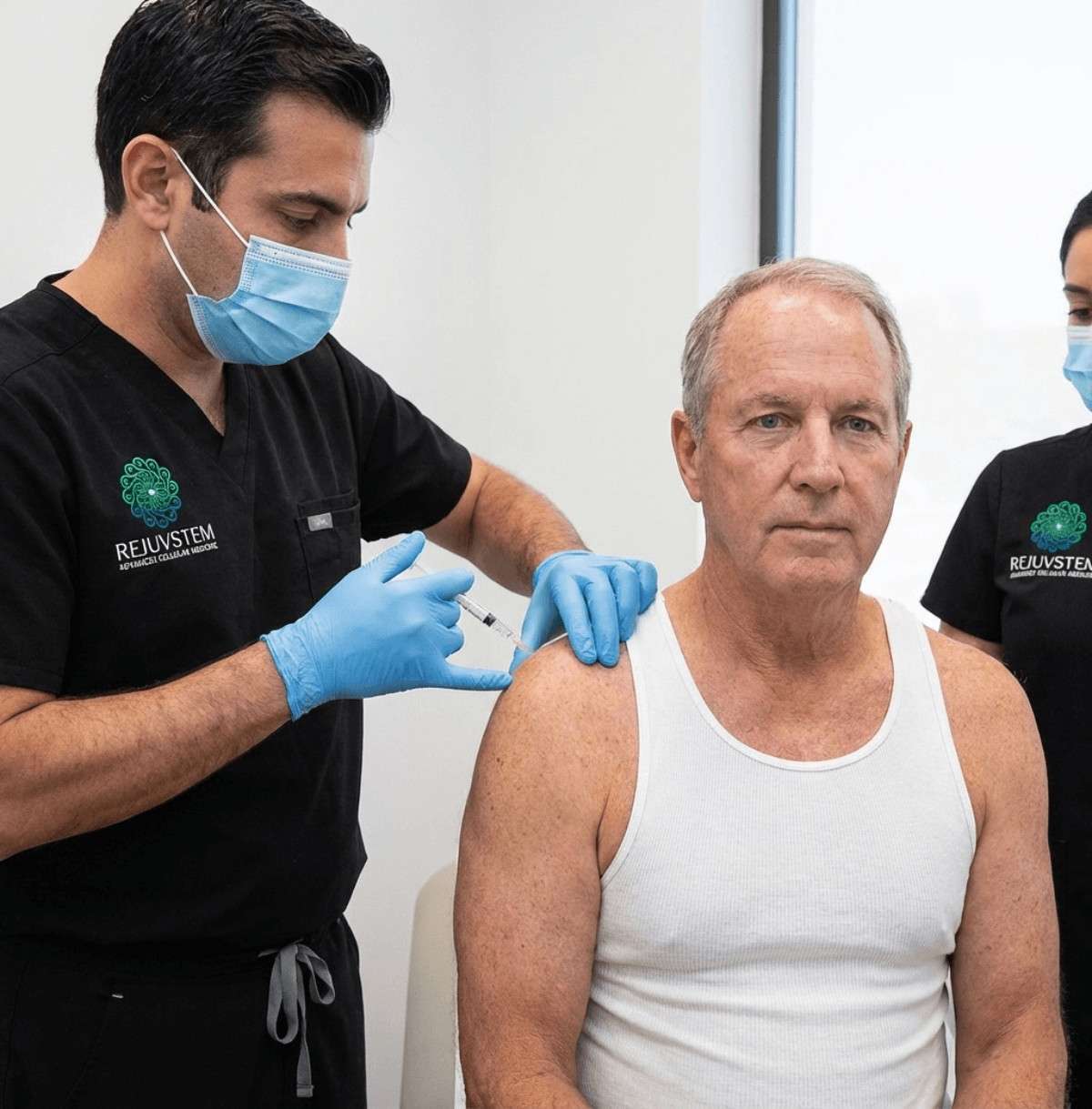
After harvesting, the stem cell sample is processed to concentrate the cells (and sometimes combined with other “biologics” like platelet-rich plasma). The resulting concentrate is then injected into the injured shoulder area – for example, into a degenerated rotator cuff tendon or an area of cartilage damage. The procedure typically uses ultrasound or X-ray imaging to guide needle placement. Because the treatment uses the patient’s own cells (autologous transplant), the risk of immune rejection is minimal. The entire treatment is usually done in one day.
Once injected, the stem cells don’t magically regrow a new tendon overnight. Instead, their main effect is to enhance the body’s natural healing processes. MSCs release anti-inflammatory and growth factors at the injury site, which can reduce pain and swelling and call in the body’s reparative cells[3]. They can also differentiate into tendon-like cells or encourage nearby cells to proliferate and rebuild the damaged tissue matrix. In essence, the therapy attempts to jump-start a healing response in tissues (like rotator cuff tendons) that normally have a poor blood supply and limited capacity to heal on their own. Over the subsequent weeks and months, patients may undergo physical therapy to further strengthen the shoulder as the injected cells do their work in the background.
It’s important to note that there are different approaches under the umbrella of “stem cell therapy.” Some clinics use bone marrow aspirate concentrate (BMAC), which contains a mixture of stem cells and growth factors from bone marrow. Others use adipose-derived stem cells, obtained after enzymatically processing fat tissue. There is ongoing debate over which source is superior for shoulder repair, and research is comparing outcomes from each. Regardless of source, any stem cell product used for treatment should be handled in a lab facility meeting sterility and quality standards, because cell therapies must be prepared carefully to avoid contamination or loss of cell viability.
What Does the Evidence Say?
Research on stem cell therapy for shoulder injuries is active and evolving. While not yet mainstream, a number of clinical studies and trials have been conducted or are underway to test its safety and effectiveness. Here is a summary of what scientific evidence has shown so far:
- •Safety: Early studies have generally found that autologous stem cell injections in the shoulder are safe and well-tolerated. For instance, a recent 3-year pilot trial of adipose-derived MSC injections for complete rotator cuff tears reported no significant adverse events over 36 months of follow-up[7][8]. Patients in that study had no abnormal immune reactions or infections, and their lab markers (blood counts, inflammatory markers) remained normal[7]. This favorable safety profile is consistent with other reports that using one’s own cells poses minimal risk of rejection. Of course, any injection carries small risks like pain at the injection site or bleeding, but serious complications appear to be rare when proper protocols are followed.
- •Pain and Function Outcomes: Some patients experience notable improvements in shoulder pain and mobility after stem cell treatment. The pilot study mentioned above observed that patients’ pain scores (on a 0-10 scale) improved from about 8.5 before treatment to 3.6 after treatment, alongside better shoulder function scores[7]. In another case-controlled study, surgeons augmented standard rotator cuff repairs with bone marrow-derived stem cells and found significantly improved healing and fewer re-tears in the stem cell-treated group versus controls[12]. Patients in such studies often report being able to return to daily activities with reduced pain.
- •Controlled Trials: The strongest evidence comes from randomized controlled trials. Results here have been mixed, highlighting that we are still in early days. On one hand, a controlled trial from South Korea (published in Scientific Reports in 2022) tested mesenchymal stem cell injections for partial-thickness rotator cuff tears and found no significant difference in pain reduction at 3 months compared to a placebo injection – essentially, the stem cell group did no better than the control group in that study’s primary outcome[13]. This suggests that, at least in that trial, the stem cell treatment did not outperform the body’s natural healing plus placebo effect in the short term. On the other hand, another trial adopted a different comparison: injecting bone marrow concentrate (containing stem cells) versus performing only exercise therapy for rotator cuff tears. In an interim analysis, patients who received the stem cell injections showed greater improvements in pain and shoulder function at 3 and 6 months than those who did exercise alone, and MRI scans showed a decrease in tear size after the stem cell treatment[14]. Notably, at 2-year follow-up, patients reported nearly 90% improvement in symptoms on average with sustained gains in function[14]. These contrasting findings underline that results can depend on the specifics of the treatment protocol, the comparison group, and the patient population.
- •Healing and Tear Repair: There is some evidence that stem cells may actually contribute to tissue healing in ways that can be seen on imaging or during surgery. A single-arm study (without a control group) reported that some patients had complete healing of their rotator cuff tear on follow-up arthroscopy after receiving an MSC injection combined with a fibrin glue carrier[9]. This is an exciting outcome, but since there was no control group in that study, we have to be cautious – it’s possible some smaller tears might heal on their own or with rest, and we can’t be certain the stem cells were the deciding factor[15]. In general, surgeons have observed better quality of repaired tissue when biologics like stem cells are used during rotator cuff repair surgery. One prominent case series found that adding bone marrow MSCs during arthroscopic rotator cuff repair led to a higher rate of intact repairs and prevented some repeat tears, compared to typical surgical outcomes without stem cells[12]. These findings align with the theory that stem cells provide a more conducive environment for tendon-to-bone integration (the critical weak link in rotator cuff surgery healing).
- •Lack of Consensus: Despite the promising reports, orthopedic experts have not reached a consensus that stem cell therapy is a proven treatment. Review articles classify stem cell augmentation for rotator cuffs as an experimental technique, due to the limited number of high-quality human studies to date[10]. Many of the positive studies have been small in sample size or lacked control groups. Additionally, the optimal source, number, and delivery method of stem cells are still being investigated – we don’t yet know the best “recipe” for success[16]. In practice, some leading sports medicine centers are cautiously using these therapies in specific cases (e.g. persistent partial tears, or as an adjunct during surgery), while advising that patients should not see stem cells as a guaranteed cure-all. As one orthopedic research review put it, the results so far are inconsistent, and more research is needed before routine use can be recommended[16].
In summary, the evidence so far indicates that stem cell therapy can be safe and potentially beneficial for certain shoulder injuries, but its effectiveness is not uniformly proven. Patients who are considering it should do so with realistic expectations – it may help, but it might also have little effect for some individuals. Importantly, it should not be seen as a magic fix that regenerates a completely torn tendon back to normal overnight. Ongoing clinical trials will tell us more about which shoulder conditions respond best to stem cell injections and how they compare to standard treatments like physical therapy or surgical repair.
Regulation and Safety Considerations (Especially in Mexico)
Because stem cell therapies are relatively new and can be easily marketed directly to consumers, it is crucial to pay attention to regulation and oversight. Around the world, health authorities have been grappling with how to ensure patient safety while allowing innovative treatments to develop. The World Health Organization (WHO) and other international health bodies have consistently warned that most stem cell treatments being offered for various conditions are still unproven. WHO’s stance is that any such unproven cell therapy should be considered strictly experimental – only to be provided within controlled clinical trials or in specialized research centers until there is solid evidence of safety and efficacy[17]. In line with this, many countries require special approvals or trial protocols for doctors to administer stem cells to patients outside of a narrow set of established uses (for example, blood stem cell transplants for certain cancers are well-established, but injecting stem cells for orthopedic injuries is not an approved standard treatment in most places).
Regulation in the United States: In the U.S., the Food and Drug Administration (FDA) has not approved any stem cell product for treating orthopedic injuries like shoulder tendon tears (apart from blood-forming stem cells for bone marrow transplants in cancer, which is a different context). The FDA has issued consumer warnings about clinics offering unapproved stem cell injections for orthopedic or other ailments, noting that such interventions carry risks and may not have any proven benefit. Providers in the U.S. who offer same-day autologous stem cell procedures often argue these fall under minimally manipulated cell therapy (which has certain regulatory exemptions), but the FDA has been tightening enforcement against those making unsubstantiated medical claims[18]. Practically, this means if you seek stem cell therapy in the U.S., you should verify whether the product is part of an FDA-sanctioned clinical trial or being done under a physician’s practice within regulatory guidelines. Many reputable clinics in the U.S. restrict regenerative injections to clinical study protocols or offer platelet-rich plasma (PRP) – which is less regulated – as an alternative.
Regulation in Mexico: Mexico has become one of the destinations for medical tourism in stem cell treatments. The Mexican regulatory authority for health products is COFEPRIS (Comisión Federal para la Protección contra Riesgos Sanitarios), which functions similarly to the FDA in the U.S., overseeing the safety and licensing of medical treatments[19]. In Mexico, the use of stem cells falls under the General Health Law, and any clinical use of human cells outside of standard therapies is supposed to occur within an authorized research protocol[20]. This means that clinics offering stem cell therapy are required to have approval to run it as a clinical trial, including clearance from a research ethics committee and authorization from COFEPRIS[20]. In practice, Mexico has had to crack down on some private clinics that were advertising and administering unproven stem cell treatments without proper approvals. Notably, in December 2015, COFEPRIS raided and shut down a clinic in Mexico City that was offering unapproved mesenchymal stem cell treatments for various health issues without any sanctioned research protocol or evidence of product quality[21]. This enforcement action set an important precedent: in Mexico it is illegal for providers to offer stem cell therapies as routine treatments outside of clinical trials. The Mexican Ministry of Health has stated it has “zero tolerance” for clinics making wild “cure-all” claims with stem cells without evidence[22]. Essentially, Mexican regulations echo the global consensus that these interventions must remain investigational until proven safe and effective[17].
That said, Mexico has been working to strengthen its regulatory framework. In the past, there were loopholes and gray areas in the laws, which some clinics exploited – and as a result, Mexico quickly became a destination for patients seeking unapproved stem cell therapies in the 2000s[23]. Recognizing this, the government and scientific community have taken steps toward more robust oversight. The involvement of institutions like CONACYT (Mexico’s National Council of Science and Technology) and leading universities in developing policies indicates a coordinated effort to tighten standards and ensure a scientific basis for stem cell practices[24]. In recent years, authorities have been developing Official Mexican Standards for cell therapy and establishing registries to track stem cell procedures performed, in order to increase transparency and patient safety[25][26].
Licensing of Clinics: One practical aspect patients should be aware of is licensing. In Mexico, for a clinic to legally offer regenerative medicine therapies (including stem cell injections), it must obtain specific licenses from COFEPRIS. These include: a license for cell collection (e.g. to harvest bone marrow or fat tissue), a license for processing or banking cells (if they isolate and grow cells in a lab), and a Regenerative Medicine therapy license[27][28]. The Regenerative Medicine license is what permits a clinic to actually administer treatments like stem cell infusions or injections to patients[28]. It is only granted if the clinic meets strict requirements for having proper equipment, trained medical personnel, and protocols to handle any complications[28]. By law, clinics in Mexico must display their COFEPRIS licenses prominently at the entrance, and patients have the right to inspect them[29]. If you visit a stem cell clinic and the license on the wall is for something else (for example, just a lab or tissue bank at a different address), that should raise a red flag[30]. Authorities warn that some offices might try to operate without the correct license or misuse a basic lab license to imply they are approved for treatments when they are not[30]. Doing a bit of due diligence – confirming the clinic’s name and address match an official COFEPRIS license for regenerative medicine – is an important safety step for any patient.
Ethical Considerations: From an ethical standpoint, charging patients for unproven stem cell therapies is controversial. Medical and ethics organizations have argued it is unethical to prey on patients’ hopes by selling expensive “stem cell cures” that lack solid evidence[31][32]. Patients with chronic shoulder injuries or degenerative conditions may be desperate to avoid major surgery and willing to pay out-of-pocket (since insurance typically will not cover experimental treatments). It’s important that such patients receive balanced information about the realistic chances of benefit versus the uncertainties. Reputable providers will often encourage patients to enroll in clinical trials (sometimes at reduced or no cost) rather than charging large fees purely for profit. The International Society for Stem Cell Research (ISSCR) and other scientific groups encourage a research-focused approach and condemn the marketing of unproven therapies directly to consumers[33]. In the U.S. and elsewhere, regulators have begun taking legal action against clinics making fraudulent claims. As a patient, skepticism is healthy – if a clinic’s website promises that their stem cells will definitely regrow your shoulder cartilage or fully heal a massive tear, that is a big warning sign because no treatment, not even surgery, can guarantee such outcomes in every case.
In summary, the regulatory landscape is evolving, but the key takeaways are: stem cell therapy for shoulder injuries is not yet a routine, approved medical treatment in most countries, and it should ideally be accessed as part of a legitimate clinical trial or at a clinic operating with proper licenses and oversight. If you are considering traveling to Mexico or another country for treatment, ensure the clinic complies with national health regulations (such as COFEPRIS in Mexico) and observe whether they emphasize patient safety and data collection. Trustworthy clinics will be transparent about their methods and will not pressure you into treatment without giving you full information.
Conclusion
Stem cell therapy holds exciting promise for healing shoulder injuries by tapping into the body’s own regenerative capacities. It offers a tantalizing vision of repairing tendons and joints without major surgery, potentially leading to stronger and pain-free shoulders. Scientific research to date provides hopeful signs – including improved healing in some studies and good safety profiles – but also serves as a reminder that we are still in the early days of this technology. Large, well-controlled trials are still needed to conclusively show how effective stem cell treatments are for shoulder conditions, and which patients are the best candidates.
Health authorities worldwide urge caution. Until more evidence is available, treatments like stem cell injections for shoulder pain should be approached within a research context or with careful medical guidance[17]. Patients exploring this option should educate themselves using trusted, unbiased sources (for example, publications by organizations like the WHO, NIH, or orthopedic research societies) and consult qualified physicians who can explain the potential risks and benefits. It is wise to avoid being swayed by marketing hype or anecdotal testimonials alone. Instead, look for clinics that publish their outcomes, follow regulatory requirements, and collaborate with scientific experts.
When done in appropriate settings, stem cell therapy for shoulder injuries could be a game-changer in the future – possibly shortening recovery times and healing tissues that today might never fully recover even with surgery. For now, it remains a frontier of regenerative medicine. Those who pursue it should do so with both optimism and due diligence. By prioritizing credible information and regulatory compliance[21][30], patients can make informed decisions and hopefully maximize their chances of a positive outcome if they decide to give this innovative therapy a try.
Sources
- 1.Stem Cells 101 | Yale Stem Cell Center
- 2.Stem Cell Basics | NIH STEM Cell Information
- 3.Stem cell therapy in the management of shoulder rotator cuff disorders – World Journal of Stem Cells (2015), PMC [3–6, 10, 34]
- 4.Initial safety outcomes of adipose-derived mesenchymal stem cells for rotator cuff tear: A 3-year pilot trial – PubMed [7, 8, 11]
- 5.A randomized controlled trial of stem cell injection for tendon tear – Scientific Reports (2022) [9, 13, 15]
- 6.AAOS 2025 Showdowns recap: Surgeons face off in debate on rotator cuff repair options [12, 35]
- 7.A Randomized Controlled Trial of the Treatment of Rotator Cuff Tears with Bone Marrow Concentrate and Platelet Products Compared to Exercise Therapy: A Midterm Analysis – PMC [14]
- 8.Stem Cells in Rotator Cuff Surgery: In Search of the Holy Grail – Arthroscopy [16]
- 9.SCA LRA Update – April 2025: Regulatory Landscape of Cell Therapies in Mexico – ISCT [17, 20–26]
- 10.Statement on Unproven Stem Cell Interventions for Lung Diseases (PDF) – ATS [18]
- 11.Regenerative Medicine Clinics in Mexico – Parent’s Guide to Cord Blood Foundation [19, 27–30]
- 12.Position statement on the sale of unproven cellular therapies for spinal cord injury – Spinal Cord (Nature) [31, 32]
- 13.ISSCR Applauds Google’s New Policy Banning Ads on Unproven Therapies [33]