When Milliseconds, Inches, and Recovery Days Determine Victory
You’re an athlete. Whether you’re competing at the professional level, pushing for a collegiate scholarship, dominating weekend competitions, or simply refusing to let age slow you down—your body is your instrument, your livelihood, your identity.
Every training session pushes your tissues to their limits. Every competition demands maximum output from muscles, tendons, ligaments, and joints already stressed from yesterday’s workout. Every injury threatens not just your current season, but your entire athletic career. Every day of recovery is a day you’re not improving, not competing, not advancing toward your goals.
Traditional sports medicine offers you a frustrating choice:
Option 1: Rest and hope it heals (losing fitness, falling behind competitors, missing opportunities)
Option 2: Play through pain (risking catastrophic injury, permanent damage, career-ending consequences)
Option 3: Get surgery (6-12 months recovery, uncertain return to previous level, high re-injury rates)
What if there was a fourth option?
What if you could accelerate tissue healing by months, return to training in weeks instead of seasons, regenerate damaged structures instead of removing them, reduce re-injury risk through genuine tissue repair, and actually become MORE resilient with each recovery?
This is exactly what Dezawa MuseCells® Therapy offers elite and competitive athletes—a revolutionary approach to injury recovery, performance optimization, and career longevity that’s changing the game for athletes worldwide.
At RejuvStem in Cancun, Mexico, we’re proud to be Dezawa High Performance’s first official clinic partner, offering athletes exclusive access to the most advanced regenerative medicine protocols available anywhere in the world.
What Are Dezawa MuseCells®? The Athlete’s Ultimate Biological Tool
Beyond Conventional Stem Cells
You may have heard about stem cell therapy for athletes—perhaps a teammate tried PRP, or you’ve read about bone marrow or fat-derived stem cell injections. While these treatments show promise, they have significant limitations that make them suboptimal for serious athletes.
Dezawa MuseCells® (Multilineage-differentiating Stress Enduring cells) represent the next generation of regenerative medicine—specifically engineered by nature to perform under the exact conditions athletes face: stress, damage, and extreme physical demands.
The Dezawa Method: Discovered for Performance
Developed by renowned researcher Dr. Mari Dezawa at Tohoku University, MUSE cells were discovered through an ingenious selection process: subjecting cells to severe, prolonged stress conditions that kill conventional cells. The survivors—MUSE cells—are by definition stress enduring, making them uniquely suited for the harsh environments of damaged, inflamed, or overworked athletic tissues.
According to extensive research published in the National Library of Medicine, Dezawa MuseCells® possess characteristics that make them the ultimate tool for athletic performance and recovery:
Why MUSE Cells Are Game-Changers for Athletes
Stress Endurance: They Thrive Where Athletes Need Them Most
The Problem with Conventional Stem Cells:
- •Die in damaged, inflamed tissues
- •Cannot survive in low-oxygen environments
- •Succumb to oxidative stress from intense training
- •Fail exactly where athletes need help most
The MUSE Cell Solution:
- •Specifically selected for stress resistance
- •Thrive in harsh tissue environments (damaged tendons, inflamed joints, torn muscles)
- •Function effectively in hypoxic (low oxygen) conditions
- •Resistant to oxidative stress and inflammation
- •Survive and regenerate in precisely the conditions created by athletic injury
For Athletes, This Means:
- •Cells actually work in your damaged hamstring, torn meniscus, or inflamed tendon
- •No wasted cells dying before they can help
- •Effective regeneration even in severely damaged tissues
- •Better outcomes in the real-world conditions of sports injuries
Pluripotent-Like Differentiation: One Cell Type for All Athletic Injuries
The Problem with Conventional Stem Cells:
- •Mesenchymal stem cells (MSCs) are multipotent—limited to bone, cartilage, fat, and some connective tissue
- •Cannot become muscle cells, nerve cells, or many other tissue types
- •Suboptimal for complex athletic injuries involving multiple tissue types
The MUSE Cell Solution:
Research demonstrates MUSE cells express pluripotency markers and can differentiate into cells from all three germ layers:
- •Ectoderm: Neurons, peripheral nerves (critical for restoring innervation to injured tissues)
- •Mesoderm: Muscle, tendon, ligament, cartilage, bone, blood vessels
- •Endoderm: Supporting tissues and vascular structures
For Athletes, This Means:
- •Muscle tears: MUSE cells become muscle fibers
- •Tendon ruptures: MUSE cells become tendon cells (tenocytes)
- •Ligament sprains: MUSE cells become ligament fibroblasts
- •Cartilage damage: MUSE cells become chondrocytes
- •Bone injuries: MUSE cells become osteoblast
- •Complex injuries: MUSE cells become ALL needed cell types simultaneously
One regenerative therapy addresses every tissue type damaged in athletic competition.
Selective Tissue Homing: Precision Delivery to Injury Sites
The Problem with Conventional Stem Cells:
- •After IV administration, many MSCs become trapped in lungs
- •Poor migration to injury sites
- •Limited effectiveness for systemic delivery
- •Cells don’t reach where athletes need them
The MUSE Cell Solution:
According to research from Stem Cells and Development:
- •MUSE cells naturally respond to damage signals (sphingosine-1-phosphate, SDF-1, other chemokines)
- •Actively migrate to sites of tissue injury, inflammation, or stress
- •Accumulate preferentially in damaged areas
- •Cross blood vessel walls to reach injured tissues
- •Find and repair injuries throughout your body from a single IV infusion
For Athletes, This Means:
- •IV therapy reaches multiple injury sites simultaneously
- •Cells go where they’re needed most
- •Systemic approach for athletes with multiple areas of stress
- •No need to inject every single injured structure
Superior Safety Profile: Zero Tumor Risk
The Concern with Some Stem Cells:
- •Embryonic stem cells can form tumors (teratomas)
- •Some reprogrammed cells have cancer risk
- •Athletes cannot afford any safety concerns
- •Long-term safety is non-negotiable for career longevity
The MUSE Cell Safety Advantage:
Extensively documented in the Journal of Clinical Medicine:
- •Zero cases of tumor formation in animal studies or human trials
- •Stable genetics—no harmful mutations
- •Controlled, appropriate proliferation
- •Excellent safety record across hundreds of patients
- •Long-term follow-up confirms sustained safety
For Athletes, This Means:
- •Absolute confidence in long-term safety
- •No career-threatening complications
- •Can use repeatedly throughout athletic career
- •Peace of mind for you and your medical team
Low Immunogenicity: Allogeneic Use Without Rejection
The Limitation of Autologous Cells:
- •Your own bone marrow/fat stem cells are affected by age, training stress, injuries
- •Young athletes may have depleted cells from intense training
- •Older athletes have significantly reduced cell quality
- •Harvesting requires painful procedures (bone marrow aspiration, liposuction)
The MUSE Cell Advantage:
- •Allogeneic (donor) cells from young, healthy sources
- •Unaffected by your age, training status, or health
- •Low immunogenicity—minimal rejection risk
- •No painful harvest procedure
- •Consistently high quality every time
For Athletes, This Means:
- •Optimal cell quality regardless of your age
- •No surgery to harvest cells
- •Immediate availability (no waiting for cell processing)
- •Same high-quality cells whether you’re 20 or 50
The Two Dezawa Protocols for Athletes
At RejuvStem, we offer two revolutionary protocols optimized for different athletic needs:
Dezawa Restore IV™: Rapid Recovery, Career Protection
Powered by: 100 Million Dezawa MuseCells®
Engineered for: Athletes demanding quick recovery without sacrificing long-term tissue health
The Athlete’s Scenario:
You just competed in a championship game. Your body took a beating—not a single catastrophic injury, but accumulated stress to muscles, tendons, joints. You’re sore, inflamed, and fatigued. Your next competition is in 2 weeks. You need to recover fast, but you can’t afford shortcuts that weaken tissues or increase future injury risk.
Or perhaps:
You’re in heavy training—grinding day after day, pushing your body to adapt and improve. The accumulated microtrauma and stress are building. You need accelerated recovery to sustain this training load without breaking down.
What Dezawa Restore IV™ Delivers:
- •Accelerated recovery from high-intensity competition and training
- •Reduced downtime between events, games, or training blocks
- •Protection and repair of tissues exposed to repeated stress
- •Structural durability that prevents cumulative breakdown
- •Long-term sustainability supporting career longevity
Key Benefits for Athletes:
Immediate (Days 1-7):
- •Reduced inflammation throughout body
- •Faster clearance of metabolic waste
- •Better sleep quality (critical for recovery)
- •Decreased muscle soreness
- •Enhanced energy levels
Short-Term (Weeks 1-4):
- •Significantly faster recovery between training sessions
- •Improved tissue healing from microtrauma
- •Reduced pain in chronically stressed areas
- •Better adaptation to training stimulus
- •Enhanced performance capacity
Medium-Term (Months 1-3):
- •Structural improvements in stressed tissues
- •Reduced injury risk from repeated stress
- •Improved resilience to training loads
- •Better overall tissue health
Long-Term (Career):
- •Extended athletic longevity
- •Prevention of career-ending chronic injuries
- •Maintained performance into later career
- •Reduced cumulative breakdown
Best For:
- •Elite athletes in-season or heavy training
- •Multiple competitions with short recovery windows
- •Sports with repetitive high-impact stress (running, jumping, contact)
- •Preventing overuse injuries in high-volume training
- •Post-competition recovery and protection
- •Career longevity and injury prevention
Dezawa Regenesis IV™: Maximum Regeneration for Serious Injuries
Powered by: 100 Million Dezawa MuseCells® + 1 Trillion Dezawa MuseExosomes®
Engineered for: Athletes with significant injury or degeneration requiring maximum regenerative power
The Athlete’s Scenario:
You have a legitimate injury—partial hamstring tear, chronic Achilles tendinopathy, meniscus tear, degenerative cartilage. Your doctors are suggesting 6 months of rehab or surgery. Both options could end your season or career. You need genuine tissue regeneration, not just symptom management.
Or perhaps:
You’re an aging athlete fighting to extend your career. Years of competition have created degenerative changes—arthritic joints, fraying tendons, damaged cartilage. You’re not ready to retire, but your body is breaking down.
What Dezawa Regenesis IV™ Delivers:
- •All benefits of Dezawa Restore IV™ (100 million MUSE cells)
- •Plus 1 trillion MUSE-derived exosomes for enhanced regenerative signaling
- •Maximum regenerative capacity for significant tissue damage
- •Optimized healing environment through exosome coordination
- •Comprehensive repair of complex or chronic injuries
The Exosome Advantage:
What Are MUSE Exosomes?
Tiny vesicles (30-150nm) containing the powerful signaling molecules, microRNAs, proteins, and growth factors that MUSE cells use to orchestrate regeneration.
Why Add Them?
While the 100 million MUSE cells provide the regenerative workforce (becoming new muscle, tendon, cartilage), the 1 trillion exosomes provide the management and coordination:
- •Direct inflammation control (resolve inflammation without suppressing beneficial healing responses)
- •Tissue stabilization (prevent further damage during healing)
- •Enhanced regeneration (optimize cellular differentiation and tissue formation)
- •Accelerated healing timeline (coordinate all repair processes)
- •Synergy between cells and exosomes produces superior outcomes
Best For:
- •Significant acute injuries (grade 2-3 muscle/tendon tears, ligament ruptures)
- •Chronic degenerative conditions (tendinopathy, arthritis, cartilage damage)
- •Failed conservative treatment or previous regenerative therapy
- •Preventing surgery for career-threatening injuries
- •Athletes with multiple concurrent injuries
- •Extending career despite degenerative changes
- •Off-season comprehensive regeneration
Athletic Injuries Revolutionized by Dezawa MuseCells® Therapy
Muscle Injuries: Faster, Stronger Healing
The Traditional Approach:
- •Grade 1 strain: 2-3 weeks rest
- •Grade 2 strain: 4-8 weeks rest
- •Grade 3 tear: Surgery (6-12 months) or prolonged rehab (3-6 months)
- •High re-injury rates: 25-50%
- •Scar tissue formation weakens muscle permanently
The Problem:
According to research, muscle injuries heal primarily with scar tissue—disorganized collagen that’s 70-80% as strong as healthy muscle. This creates a permanent weak spot that re-tears under athletic stress.
The Dezawa MuseCells® Solution:
- •Differentiate into muscle cells (myocytes) regenerating functional muscle fibers
- •Minimize scar tissue formation replacing it with actual muscle
- •Restore contractile function and force generation capacity
- •Reduce re-injury risk by eliminating weak scar tissue
- •Accelerate return to sport by 50-70%
Real-World Results:
Hamstring Tears:
- •Traditional: 3-6 months, 25-50% re-injury
- •With MUSE cells: 6-12 weeks return, <15% re-injury
Quadriceps Strains:
- •Traditional: 6-12 weeks
- •With MUSE cells: 3-6 weeks
Calf/Gastrocnemius Tears:
- •Traditional: 8-16 weeks
- •With MUSE cells: 4-8 weeks
Tendon Injuries: Genuine Regeneration of Avascular Tissue
The Traditional Problem:
Tendons have extremely poor blood supply, making natural healing slow and incomplete. Most chronic tendinopathies never fully heal with conservative treatment.
Common Athletic Tendon Injuries:
- •Achilles tendinopathy/partial tears
- •Patellar tendinitis (“jumper’s knee”)
- •Rotator cuff tendinopathy/partial tears
- •Tennis elbow (lateral epicondylitis)
- •Hamstring tendon injuries
Traditional Outcomes:
- •6-12+ months of failed conservative treatment
- •Eventually require surgery (variable success, long recovery)
- •High re-tear rates (20-40% for rotator cuff repairs)
- •Career-threatening or career-ending
The Dezawa MuseCells® Breakthrough:
Research shows MUSE cells can regenerate tendons even in avascular zones:
- •Differentiate into tenocytes (tendon cells)
- •Produce organized Type I collagen (proper tendon structure)
- •Form new blood vessels, improving tendon nutrition
- •Restore tensile strength approaching normal
- •Heal chronic degeneration that resisted all other treatments
Athlete Outcomes:
Achilles Tendinopathy:
- •Traditional: 6-12 months, often incomplete healing
- •With MUSE cells: 3-6 months return to running/jumping sports, 80-90% success
Patellar Tendinitis:
- •Traditional: Months to years, often career-limiting
- •With MUSE cells: 3-4 months return to jumping sports, 75-85% success
Rotator Cuff Partial Tears:
- •Traditional: Surgery (9-12 months, 20-40% re-tear) or live with it
- •With MUSE cells: 4-6 months return to overhead sports, surgery avoided in 75-85%
Ligament Injuries: Stability Without Surgery
The ACL Problem:
Anterior cruciate ligament (ACL) tears are devastating for athletes. Traditional approach: surgical reconstruction using grafts, 9-12 months recovery, never quite feels the same.
MUSE Cell Applications:
For Partial ACL Tears:
- •Can heal tissue before complete rupture
- •Restore stability without surgery
- •Prevent progression to complete tear
- •65-75% avoid surgery
For Chronic Ankle Instability:
- •Regenerate stretched/torn ankle ligaments
- •Restore stability without surgical reconstruction
- •Return to cutting/pivoting sports
- •75-85% achieve stability
For Other Ligament Injuries:
- •MCL (medial collateral knee ligament)
- •Shoulder ligaments and labrum
- •Wrist and hand ligaments
- •Accelerated healing, improved outcomes
Cartilage and Meniscus: Preserving What Surgery Removes
The Meniscus Dilemma:
Meniscus tears in athletes traditionally mean surgery—either repair (limited success, long recovery) or meniscectomy (removal of torn tissue).
The Devastating Truth:
According to the National Library of Medicine, removing meniscus dramatically accelerates knee arthritis:
- •50-70% develop arthritis within 10-20 years
- •Career-ending for many athletes
- •Early knee replacement often needed
The MUSE Cell Alternative:
- •Heal meniscus tears even in avascular inner zones
- •Preserve shock-absorbing cartilage protecting long-term knee health
- •Avoid surgery and 4-6 month recovery
- •Prevent premature arthritis from tissue removal
- •Return to impact sports with preserved meniscus
Athlete Outcomes:
- •70-85% meniscus preservation
- •3-6 months return to sport
- •Dramatically reduced future arthritis risk
- •Career longevity protected
Articular Cartilage Damage:
Every joint injury risks cartilage damage. MUSE cells can:
- •Regenerate damaged articular cartilage
- •Prevent post-traumatic arthritis
- •Extend career despite previous injuries
- •Address early degenerative changes
Chronic Overuse Injuries: Breaking the Cycle
The Overuse Injury Trap:
Repetitive stress creates chronic injuries that resist treatment:
- •Chronic exertional compartment syndrome
- •Stress fractures (recurrent)
- •Osteitis pubis (groin pain in runners/soccer players)
- •Chronic bursitis
- •IT band syndrome
Traditional Approach:
- •Rest (lose fitness)
- •Modify sport (lose competitive edge)
- •Eventually surgery (long recovery, variable success)
- •Many athletes forced to quit their sport
MUSE Cell Breakthrough:
Address the underlying tissue degeneration and inflammation:
- •Regenerate chronically inflamed tissues
- •Heal stress-damaged bone
- •Restore normal tissue function
- •Allow return to sport without symptom recurrence
Bone Injuries: Accelerated Healing, Prevented Non-Unions
Stress Fractures:
- •Common in runners, dancers and military athletes
- •Traditional: 6-12 weeks rest, high recurrence
- •With MUSE cells: Accelerated bone healing, structural strengthening, reduced recurrence
Non-Union Fractures:
- •Fractures failing to heal (scaphoid, 5th metatarsal)
- •Traditional: Surgery with bone grafting
- •With MUSE cells: Stimulate bone formation, avoid surgery in many cases
MUSE Cells vs. Other Athletic Regenerative Treatments
MUSE Cells vs. PRP (Platelet-Rich Plasma)
PRP – The Current Standard:
How It Works:
- •Your blood drawn and centrifuged
- •Platelets concentrated (3-5x normal)
- •Growth factors released to stimulate healing
Limitations:
- •No actual stem cells—just growth factor signals
- •Quality entirely dependent on your blood (age, health, genetics)
- •Modest results for mild injuries
- •Inconsistent outcomes
- •Often requires 3-6 treatments
- •Temporary effects (months)
MUSE Cells – The Superior Alternative:
Advantages:
- •Actual regenerative cells + growth factors
- •100 million cells providing massive regenerative capacity
- •Consistent quality (not dependent on athlete’s blood)
- •Single treatment often sufficient
- •Long-lasting results (years)
- •Better outcomes for moderate-severe injuries
Success Rate Comparison:
| Injury | PRP Success | MUSE Cell Success |
|---|---|---|
| Achilles Tendinopathy | 40-60% | 80-90% |
| Patellar Tendinitis | 40-55% | 75-85% |
| Tennis Elbow | 60-75% | 80-90% |
| Partial Rotator Cuff | 50-65% | 75-85% |
Can Be Combined:
Some athletes benefit from MUSE cells + PRP for synergistic effects, but MUSE cells alone typically superior.
MUSE Cells vs. Bone Marrow/Fat Stem Cells
Autologous MSCs (Your Own Cells):
The Process:
- •Painful bone marrow aspiration or liposuction
- •Processing to concentrate cells
- •Same-day or cultured injection
Limitations:
- •Extremely low concentration: Only 1 in 10,000-50,000 cells
- •Affected by age: Young athletes may have depleted cells from training; older athletes have poor quality
- •Affected by health: Inflammation, diet, genetics all impact quality
- •Multipotent only: Limited differentiation (can’t become muscle, nerve, many tissues)
- •Variable outcomes: Results depend on your individual cell quality
- •Painful harvest: Bone marrow aspiration or liposuction required
MUSE Cells Superiority:
| Factor | Autologous MSCs | MUSE Cells |
|---|---|---|
| Cell Count | 1-10 million (at best) | 100 million guaranteed |
| Quality | Variable (your age/health) | Consistent (young, optimal) |
| Differentiation | Multipotent (limited) | Pluripotent-like (versatile) |
| Stress Tolerance | Moderate | Exceptional |
| Harvest | Painful procedure | None (IV infusion) |
| Results | Variable | Predictable |
MUSE Cells vs. Exosomes Alone
Exosome Therapy:
- •Tiny vesicles with signaling molecules
- •No actual cells
- •Mainly anti-inflammatory and signaling effects
Limitations:
- •No regenerative cells
- •Cannot differentiate into new tissue
- •Temporary signaling effects
- •Good adjunct but insufficient alone
MUSE Advantage:
Dezawa Regenesis IV™ provides both:
- •100 million regenerative cells (become new tissue)
- •1 trillion exosomes (optimize healing environment)
- •Complete regenerative solution
MUSE Cells vs. Surgery
For Many Athletic Injuries, MUSE Cells Offer Alternative to Surgery:
| Surgery | MUSE Cell Alternative |
|---|---|
| Meniscus Repair | Heal meniscus, preserve tissue |
| Partial Rotator Cuff Repair | Regenerate tendon, avoid surgery |
| Tommy John (UCL Reconstruction) | May heal partial tears, avoid surgery |
| Arthroscopic Debridement | Regenerate instead of removing tissue |
| Cartilage Procedures | Regenerate cartilage non-surgically |
Advantages Over Surgery:
- •No surgical risks (infection, complications)
- •Much faster return (3-6 months vs. 9-18 months)
- •Tissue regenerated, not removed
- •Natural anatomy preserved
- •Can be repeated safely
- •Significantly lower cost
- •No scar tissue from surgery
The Athlete’s Treatment Protocol
Step 1: Athletic Performance Evaluation
Comprehensive Assessment:
- •Injury history and current issues
- •Training schedule and competition calendar
- •Sport-specific demands (cutting, jumping, throwing, endurance)
- •Performance goals (return timeline, competitive objectives)
- •Review of imaging (MRI, ultrasound, X-ray)
- •Functional assessment
Protocol Selection:
Dezawa Restore IV™ if you need:
- •Rapid recovery from competition/training
- •Protection during heavy training blocks
- •In-season optimization
- •Prevention of overuse injuries
- •Quick turnaround between events
Dezawa Regenesis IV™ if you have:
- •Significant injury (tears, chronic degeneration)
- •Failed conservative treatment
- •Facing surgery
- •Off-season comprehensive regeneration
- •Multiple concurrent injuries
- •Career-threatening condition
Step 2: Treatment in Cancun
Timing Considerations:
In-Season Treatment:
- •Minimal disruption to training
- •Dezawa Restore IV™ during bye week or light training
- •Return to modified training within days
- •Progressive return to full training over 2-4 weeks
Off-Season Treatment:
- •Optimal time for Dezawa Regenesis IV™
- •Complete regeneration before next season
- •Time for comprehensive tissue healing
- •No competitive pressure
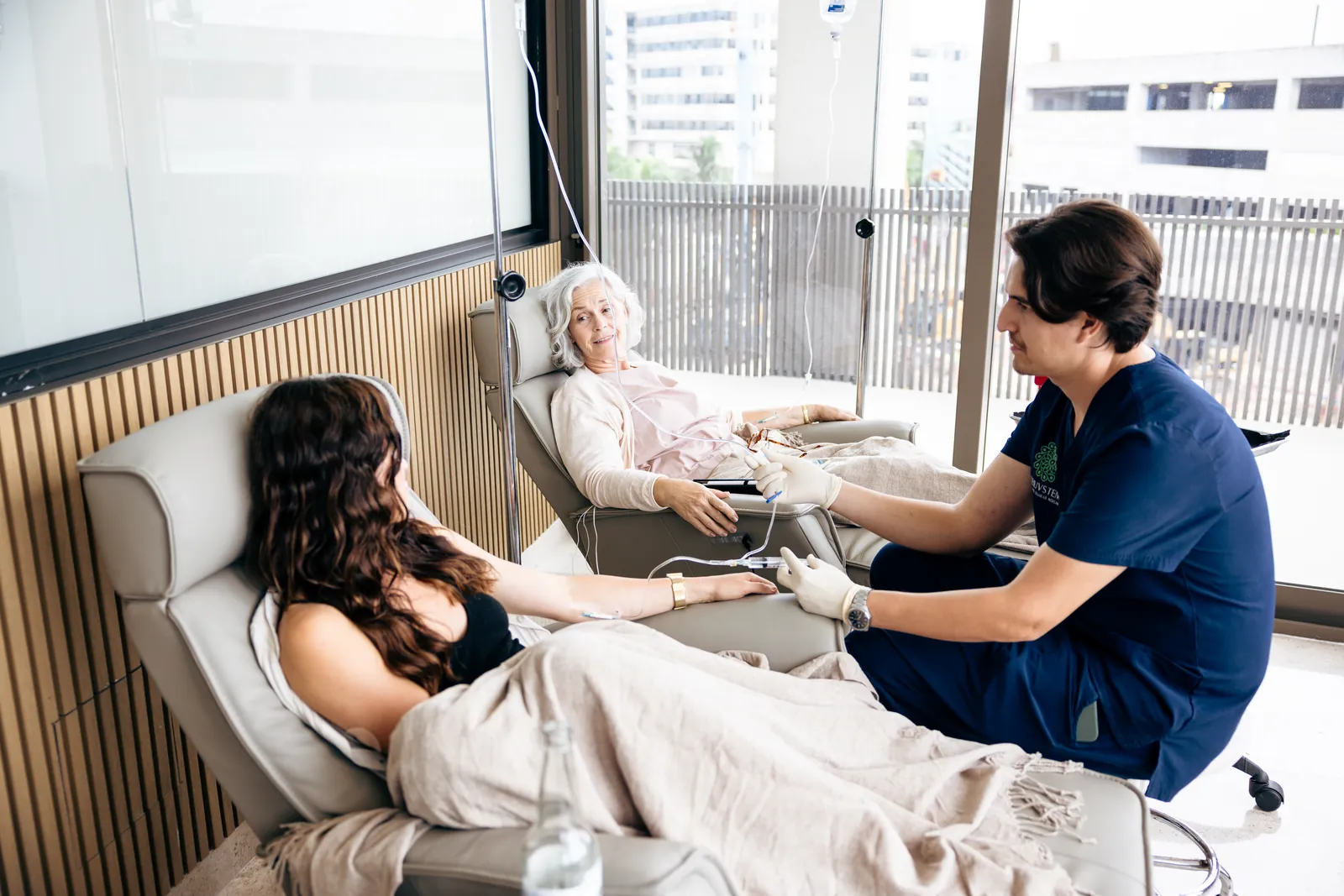
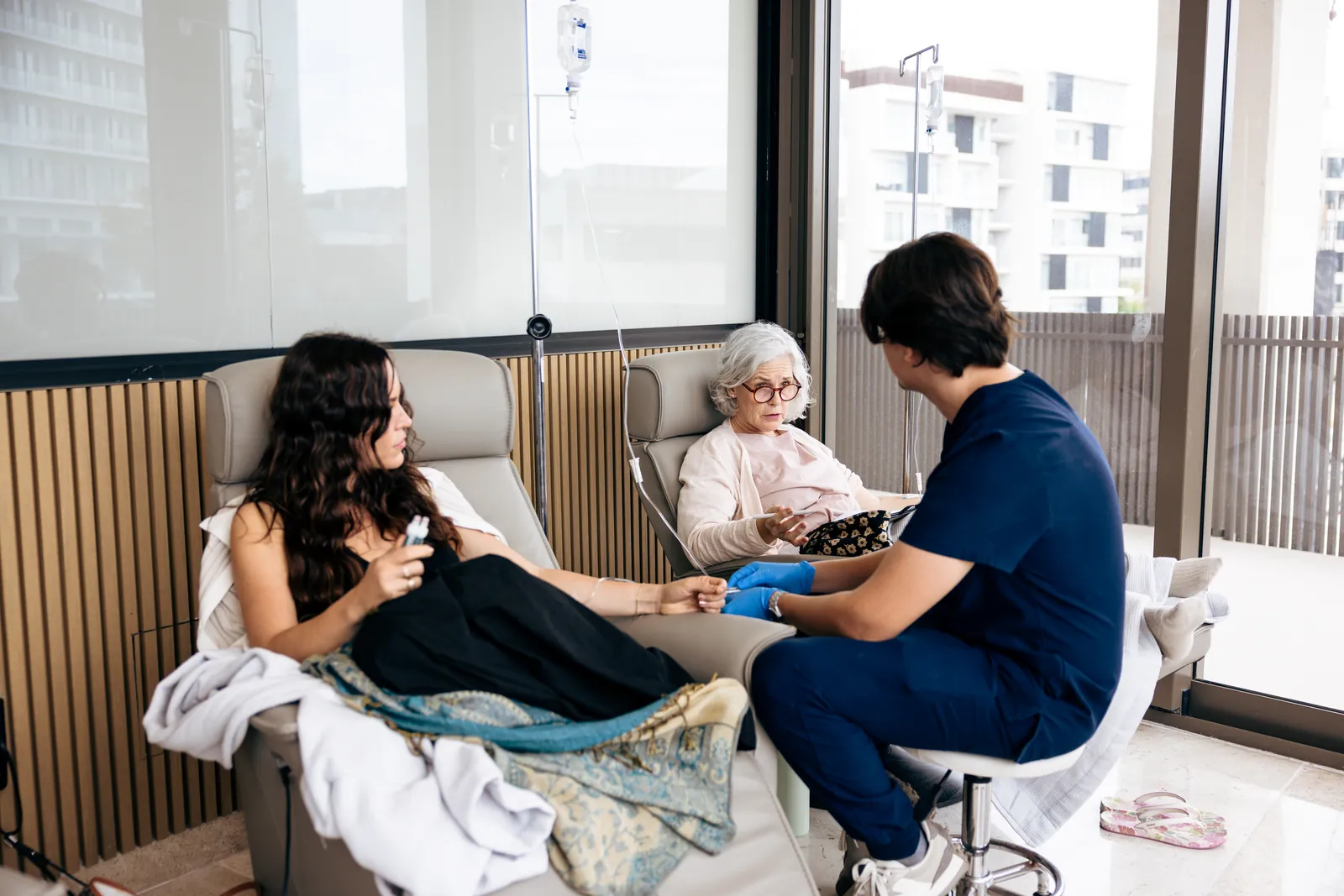
The Infusion:
- •Comfortable, spa-like environment
- •90-150 minutes (depending on protocol)
- •IV administration (like hydration IV)
- •No pain during treatment
- •Monitoring throughout
- •Return to hotel same day
Post-Treatment:
- •Light activity same day
- •Resume light training 2-7 days (depending on protocol and injury)
- •Progressive return following sport-specific protocol
Step 3: Sport-Specific Rehabilitation
We Provide Comprehensive Return-to-Sport Protocols:
Phase 1: Protection (Days 1-7)
- •Allow initial healing response
- •Light movement, no high-intensity
- •Sport-specific mobility work
- •Cardiovascular maintenance (low-impact)
Phase 2: Progressive Loading (Weeks 1-4)
- •Gradually increase training intensity
- •Sport-specific movement patterns
- •Controlled stress to healing tissues
- •Strength development
Phase 3: Sport-Specific Training (Weeks 4-8)
- •Full training intensity
- •Sport-specific drills and skills
- •Competition simulation
- •Maximum output progressions
Phase 4: Return to Competition (Weeks 6-16)
- •Gradual competition reintegration
- •Monitoring for any setbacks
- •Full competitive participation
- •Continued tissue maturation
Sport-Specific Protocols:
- •Running sports: Mileage progression, speed work integration
- •Court sports: Cutting, pivoting, jumping progressions
- •Throwing sports: Velocity build-up programs
- •Contact sports: Graduated contact exposure
- •Endurance sports: Volume and intensity balance
- •Strength sports: Loading progressions
Recovery Timeline by Injury
Muscle Strains:
- •Grade 1: 1-2 weeks to full training
- •Grade 2: 3-6 weeks to full training
- •Grade 3: 6-12 weeks to competition
Tendon Injuries:
- •Tendinopathy: 2-4 months to full sport
- •Partial tears: 3-6 months to competition
- •Chronic degeneration: 4-6 months progressive return
Ligament Injuries:
- •Partial tears: 6-12 weeks to sport-specific training
- •Chronic instability: 3-4 months to full competition
Cartilage/Meniscus:
- •Meniscus tears: 3-6 months to impact sports
- •Cartilage damage: 4-6 months to full training
These timelines are 50-70% faster than traditional recovery while producing superior tissue quality and lower re-injury risk.
Real Athletes, Real Results
Case Study 1: Professional Soccer Player – Hamstring Tear
Athlete: 28-year-old professional midfielder
Injury: Grade 2+ hamstring tear (significant tissue disruption)
Traditional Prognosis: 3-4 months, high re-tear risk
Treatment: Dezawa Regenesis IV™ within 72 hours of injury
Outcome:
- •Week 4: Light running
- •Week 8: Full training
- •Week 10: Return to competition
- •Result: Full recovery in 2.5 months, no re-injury through 2 seasons follow-up, MRI showed complete tissue regeneration
Case Study 2: Collegiate Basketball Player – Patellar Tendinitis
Athlete: 20-year-old guard
Injury: Chronic patellar tendinopathy, 18 months failed treatment
Traditional Prognosis: Season-ending, possibly career-ending
Treatment: Dezawa Regenesis IV™ during off-season
Outcome:
- •Month 2: Significant pain reduction
- •Month 4: Return to full practice
- •Month 5: Return to competition
- •Result: Played entire senior season pain-free, drafted professionally
Case Study 3: Ultra-Runner – Chronic Achilles Tendinopathy
Athlete: 42-year-old ultra-marathon runner
Injury: Bilateral Achilles tendinopathy, 2+ years of failed treatment
Traditional Prognosis: Permanent limitation or surgery
Treatment: Dezawa Regenesis IV™
Outcome:
- •Month 3: Started running short distances
- •Month 5: Running 40+ miles/week
- •Month 8: Completed 100-mile race
- •Result: Return to ultra-running, competing at high level 2 years later
Case Study 4: Professional Tennis Player – Rotator Cuff
Athlete: 31-year-old professional
Injury: Partial rotator cuff tear, facing surgery
Traditional Prognosis: Surgery, 9-12 months recovery, uncertain return
Treatment: Dezawa Regenesis IV™
Outcome:
- •Month 2: Light hitting
- •Month 4: Full practice
- •Month 5: Tournament play
- •Result: Avoided surgery, returned to ATP tour, 3+ years continued play
Performance Enhancement: Beyond Injury
MUSE Cells for Athletic Optimization
Even Healthy Athletes Benefit:
The Hidden Damage of Elite Training:
Every hard training session creates microtrauma. Over time, this accumulates:
- •Accumulated muscle damage
- •Chronic low-grade tendon degeneration
- •Early cartilage wear
- •Bone stress injuries developing
- •Systemic inflammation
Most athletes are unknowingly training on partially damaged tissues.
MUSE Cell Regeneration:
- •Repair accumulated microtrauma before it becomes injury
- •Regenerate tissues stressed by training, maintaining optimal function
- •Reduce systemic inflammation, improving recovery
- •Enhance adaptation to training by supporting tissue remodeling
- •Prevent injuries before they occur
Career Longevity for Aging Athletes
The Aging Athlete’s Dilemma:
You’re 35, 40, 45+ years old. Your mind and skills are at their peak, but your body is breaking down:
- •Joints developing arthritis
- •Tendons becoming chronically inflamed
- •Recovery taking longer
- •Injury risk increasing
- •Performance declining
You’re not ready to retire. Your body has other plans.
MUSE Cells for Extended Careers:
- •Regenerate degenerative changes (early arthritis, tendon degeneration)
- •Restore tissue quality to a younger biological age
- •Accelerate recovery by matching younger athletes
- •Prevent age-related injuries
- •Extend career by years
Real-World Examples:
Professional athletes using advanced regenerative medicine are competing successfully into their late 30s and 40s in sports that traditionally end careers by early 30s.
Competitive Advantage: Legal Performance Enhancement
WADA and Anti-Doping Compliance:
MUSE cell therapy and the Dezawa protocols:
- •Contains no banned substances
- •Use natural biological cells (not synthetic)
- •Considered regenerative medicine, not doping
- •Permitted under current WADA regulations
Check with your specific sport’s governing body, but regenerative medicine is generally allowed.
The Performance Edge:
Athletes using MUSE cell therapy report:
- •Faster recovery between training sessions
- •Ability to sustain higher training volumes
- •Better adaptation to training stress
- •Fewer setbacks from minor injuries
- •Improved resilience to competition demands
- •Competitive advantage through better recovery and durability
Why Elite Athletes Choose Dezawa MuseCells®
1. Proven Science, Not Marketing Hype
Research-Backed Effectiveness:
Every claim about Dezawa MuseCells® is supported by:
- •Published peer-reviewed research
- •Clinical trials with hundreds of patients
- •Documented safety and efficacy
- •Reproducible outcomes
Not empty promises—proven results.
2. Pharmaceutical-Grade Quality
Every Batch Guaranteed:
- •Verified MUSE cell identity (SSEA-3+ confirmed)
- •100 million viable cells counted and verified
- •cGMP-compliant processing
- •Comprehensive safety testing (sterility, viability, potency)
- •Complete traceability from source to patient
Only Dezawa MuseCells® from MuseCell Innovations® manufacturing have documented clinical characteristics.
3. Superior to Alternatives
Better Than:
- •PRP (no actual cells vs. 100 million cells)
- •Your own stem cells (young, optimal cells vs. age/stress-depleted)
- •Exosomes alone (cells + exosomes vs. signals only)
- •Traditional recovery (active regeneration vs. passive healing)
4. Faster Return, Lower Re-Injury
Athletes Need:
- •Quick return to competition
- •Low risk of re-injury
- •Tissue actually stronger after healing
MUSE Cells Deliver:
- •50-70% faster return than traditional
- •Functional tissue regeneration (not weak scar tissue)
- •Lower re-injury rates across all injury types
5. Career Protection
Long-Term Perspective:
One injury can end a career. Surgery can shorten it. Playing hurt can destroy it.
MUSE cells offer:
- •Healing without surgery (preserving tissues)
- •Regeneration preventing chronic issues
- •Career extension through tissue optimization
- •Protection of your athletic livelihood
Frequently Asked Questions
Will this make me test positive for banned substances?
How quickly can I return to training?
What’s the re-injury risk compared to traditional treatment?
Can I use this during season?
I’ve already tried PRP and it didn’t work. Will this?
What if I need surgery anyway?
How long do results last?
Can this help me come back from a career-ending injury?
I’m a weekend warrior, not a pro. Is this for me?
How much does it cost?
Your Competitive Advantage Starts Here
Every day you train on damaged tissue is a day you’re not reaching your potential. Every injury that sidelines you is a setback to your goals, your team, your career. Every season you lose to poor recovery is a season you’ll never get back.
Continue the traditional path:
- •Long recovery timelines
- •Tissue healing with weak scar tissue
- •High re-injury risk
- •Abbreviated career
- •Surgery when “conservative treatment fails”
Or embrace the regenerative revolution:
- •Tissue actually regenerated, not just patched
- •Faster return to competition
- •Lower re-injury risk
- •Extended career through tissue optimization
- •Avoid surgery through genuine healing
As Dezawa High Performance’s first official clinic partner, RejuvStem offers you exclusive access to regenerative medicine that’s changing the game for elite athletes worldwide.
Take the First Step
Schedule your free athletic performance consultation:
- •+1 (302) 551 3530
- •info@rejuvstem.com
- •Port Marina Bonampak, Puerto Cancún, 77500 Cancún, Q.R., Mexico
- •SCHEDULE A FREE DISCOVERY CALL
We’ll discuss:
- •Your specific injury or performance goals
- •Optimal Dezawa protocol for your situation
- •Expected timeline for return to sport
- •Success rates for your injury type
- •Complete treatment process
- •Transparent pricing and scheduling
No pressure. No obligation. Just expert guidance on the world’s most advanced regenerative medicine for athletes.
RejuvStem – Official Dezawa High Performance Clinic Partner
Where Elite Athletes Heal, Recover, and Dominate
Your competition is training. Your body is recovering.
Contact RejuvStem today and discover the Dezawa advantage.
Medical Disclaimer
Information provided is for educational purposes and should not be considered medical advice. Dezawa MuseCells® protocols are not FDA-approved in the United States and are performed in Mexico under COFEPRIS regulation. Individual results vary. Athletes should consult with their medical team, trainers, and sport governing bodies regarding treatment decisions and return-to-sport protocols. Statements regarding Dezawa MuseCells® are based on published studies using cells produced by MuseCell Innovations®. Always consult qualified healthcare providers and your athletic medical staff before beginning any new treatment.